

South San Francisco changes quickly as you move from the western hills toward the Bay. Westborough and Buri Buri sit in a different setting from Downtown, Sign Hill, or the commercial areas east of Highway 101.
Those differences matter overhead.
Roof slope, elevation, surrounding buildings, wind exposure, drainage, and access can all change how a roof ages. South San Francisco Roofing Contractors looks at those conditions together rather than treating every 94080 property as though it sits in the same environment.
The city itself occupies a valley bordered by the San Bruno Mountains and Coast Range, with much of South San Francisco facing the Bay. Its western hills also shield portions of the city from much of the fog found in nearby communities.
That makes neighborhood context a useful part of understanding what a roof is experiencing.
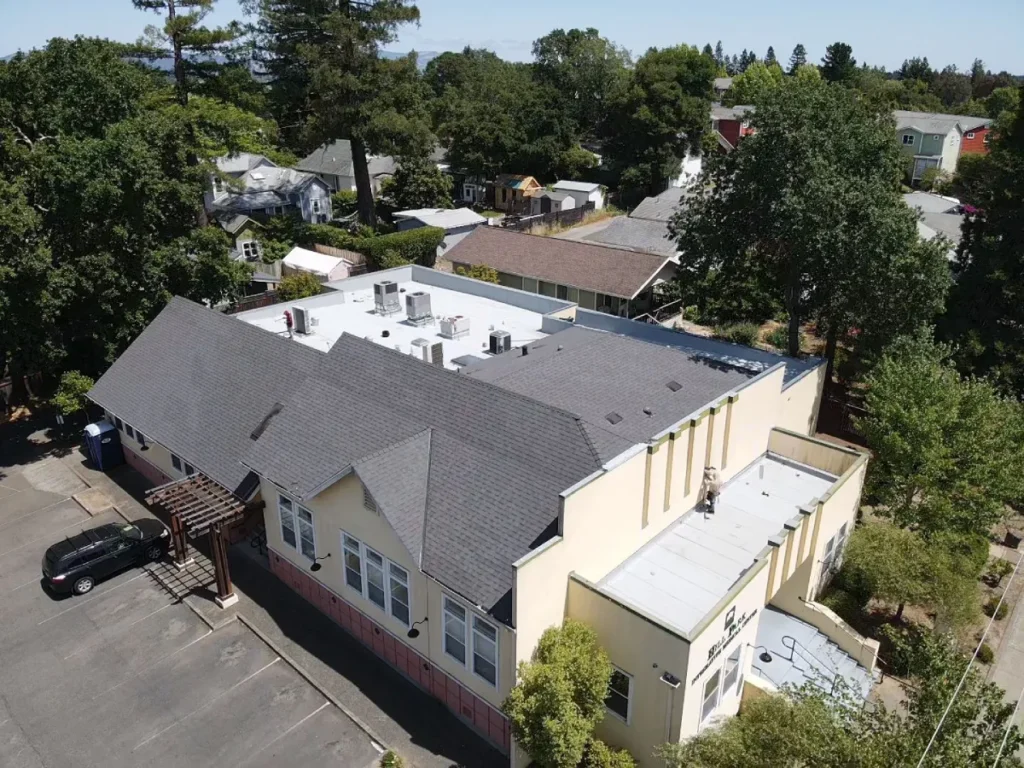
Westborough, Buri Buri, and Winston Manor/Serra expanded along the slopes west of El Camino, giving this side of South San Francisco a distinctly residential character.
On elevated streets, exposure and drainage deserve attention. Water still needs a clear path away from roof surfaces, while edges, flashing, vents, and other transitions remain important places to inspect as materials age.
Around Sign Hill and Stonegate, terrain becomes even more noticeable. The City describes Sign Hill as steep and exposed, with weather that can vary considerably from nearby urban areas and periods of high wind at higher elevations.
A roofing concern here should be evaluated in the context of that exposure, not from a generic checklist.
Closer to Downtown and Old Town, buildings sit in a denser urban setting than the subdivisions farther west. Roof access, neighboring structures, drainage paths, and previous alterations can all influence what an inspection reveals.
Neighborhoods such as Sunshine Gardens, Paradise Valley, Terra Bay, and Avalon add still more variation between flatter residential streets and hillside properties.
East of Highway 101, South San Francisco’s historic industrial identity becomes more visible. The city has evolved from heavy industry toward biotechnology, light industry, and other businesses, creating a building landscape very different from its western residential neighborhoods.
That variety is exactly why roofing here should be considered building by building.
Details decide durability. The neighborhood helps tell us which details deserve attention first.
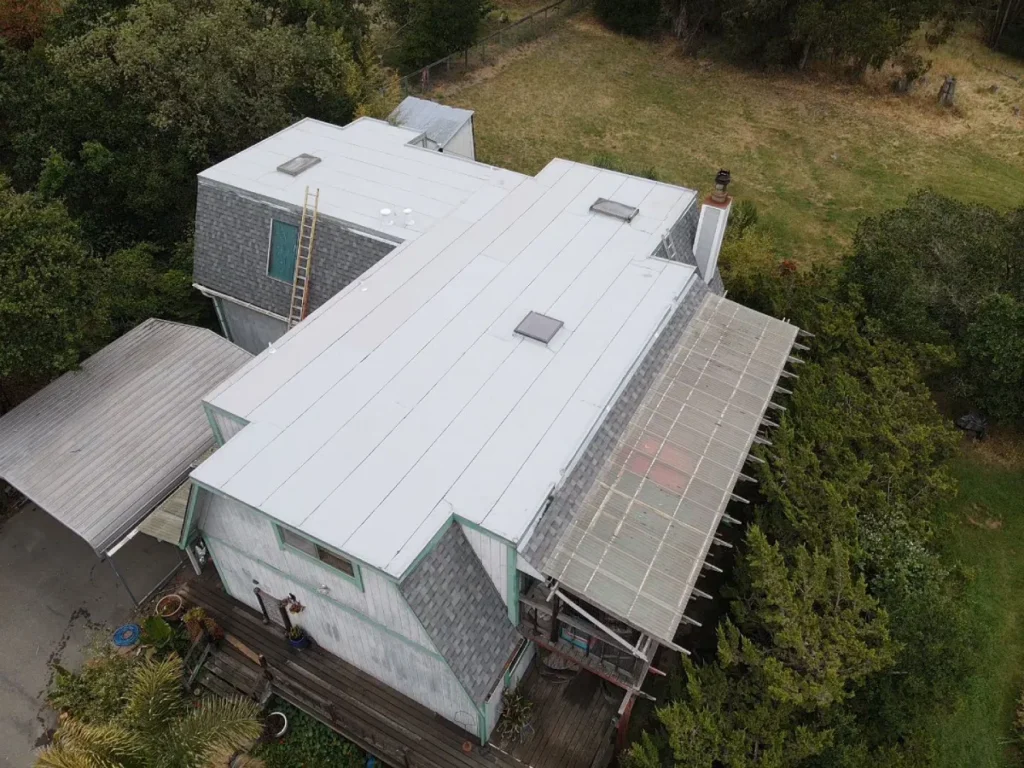
A stain, loose edge, slow drain, or recurring damp area tells only part of the story. Where the property sits in South San Francisco can provide valuable context about exposure, access, drainage, and the building around it.
If something has changed overhead, do not wait for a small clue to become a larger question. Tell us your neighborhood, what you have noticed, and where it is showing up. We can help determine what deserves a closer look.
 Trustindex verifies that the original source of the review is Google.

 Trustindex verifies that the original source of the review is Google.
 Trustindex verifies that the original source of the review is Google.
 Trustindex verifies that the original source of the review is Google.

We use cookies to improve your experience and to record and monitor communications on our site. By using our site, you consent to our use of cookies and agree to our Privacy Policy and Term of Use.
Manage your cookie preferences below:
Essential cookies enable basic functions and are necessary for the proper function of the website.
These cookies are needed for adding comments on this website.
Statistics cookies collect information anonymously. This information helps us understand how visitors use our website.
Google Analytics is a powerful tool that tracks and analyzes website traffic for informed marketing decisions.
Service URL: policies.google.com (opens in a new window)
Marketing cookies are used to follow visitors to websites. The intention is to show ads that are relevant and engaging to the individual user.
Google Maps is a web mapping service providing satellite imagery, real-time navigation, and location-based information.
Service URL: policies.google.com (opens in a new window)
You can find more information in our Terms of Service and Privacy Policy.