

Walk up Cascade Drive at noon and the pavement is still damp under the redwoods, while roofs in Strawberry have been dry for hours. Mill Valley packs canyon shade, steep ridges, and bay shoreline into a few square miles, and each one ages a roof differently. Below are the questions we hear most, answered neighborhood by neighborhood.
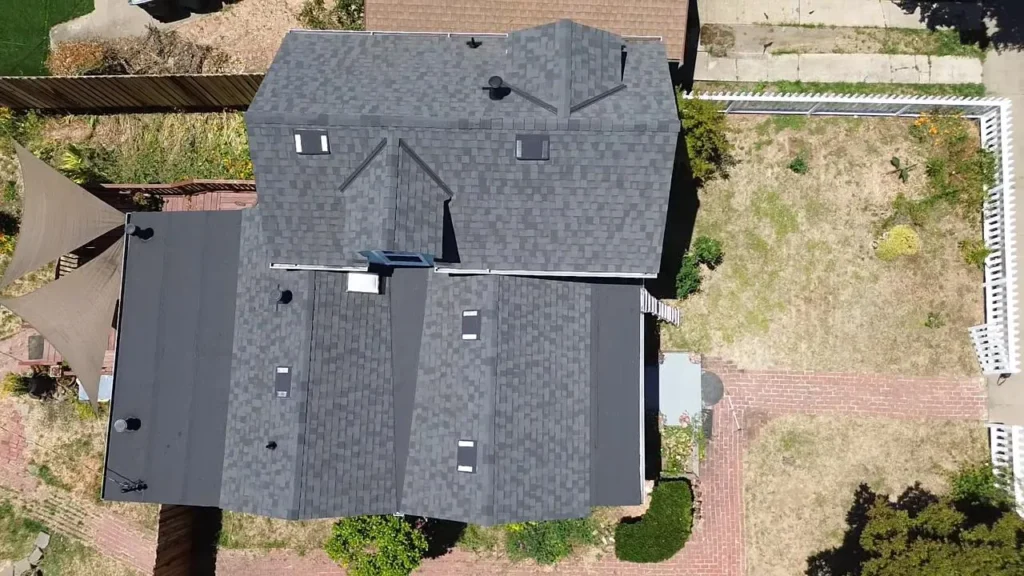
In Old Mill, Cascade Canyon, and Blithedale Canyon, tall redwoods keep many roofs shaded most of the day. Surfaces dry slowly, and moss settles into shingle laps. The moss is usually a symptom. The real problem is retained moisture, plus needles packing gutters and valleys until water backs up under the roof edge.
Neighbors talk about the trees and the view. We look at the roof above the conversation: the valleys, the gutters, and the north-facing slopes that never quite dry.
What we check first: valleys, gutter outlets, and the underside of the roof edge.
Much of Mill Valley’s hillside sits in mapped fire hazard severity zones. In those zones, California’s Chapter 7A calls for a Class A roof assembly. That rating covers the covering, underlayment, and deck together, not just the shingle. Ember-resistant vents and metal-flashed valleys are part of the same requirement, and older wood shake roofs generally can’t be replaced with new shake.
Access matters too. On Middle Ridge, Throckmorton Ridge, and in Scott Highlands, narrow lanes, stair-only lots, and tight parking shape how materials arrive and how long a project runs. We plan staging before we set a start date.
What we check first: your parcel’s fire zone, existing roof layers, and how a crew will actually reach the roof.
Planning a reroof in a fire zone? Start with what the code will ask for.
At the shoreline, the pressure shifts from shade to salt. In Strawberry and along Richardson Bay, damp bay air works on exposed fasteners, flashing, and metal drip edges. In Tamalpais Valley, fog and afternoon wind pull in from the coast and drive moisture into those same edges.
Where homes have flat-roofed additions, the seams and scuppers need the same attention as the main roof.
What we check first: fasteners, flashing laps, and drip edges on the windward side.
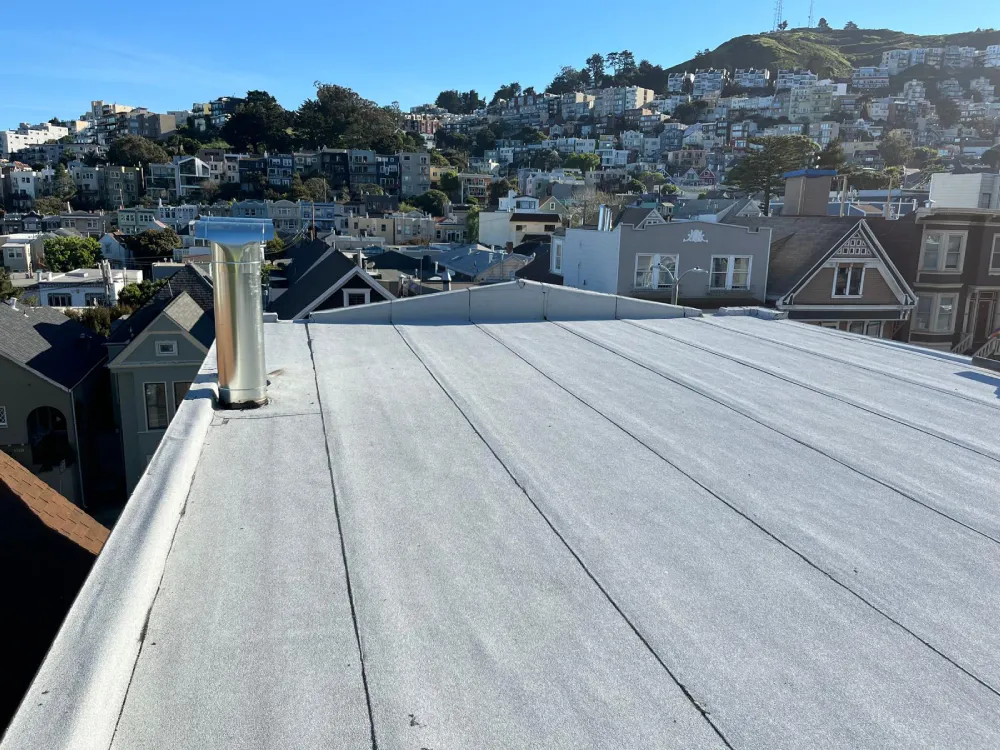
Moss, needles, and salt all work slowly, then show up at once during the first big storm. Get a clear read on your roof now, with photos, plain answers, and a fire-zone check if you’re planning ahead.
 Trustindex verifies that the original source of the review is Google.

 Trustindex verifies that the original source of the review is Google.
 Trustindex verifies that the original source of the review is Google.
 Trustindex verifies that the original source of the review is Google.

We use cookies to improve your experience and to record and monitor communications on our site. By using our site, you consent to our use of cookies and agree to our Privacy Policy and Term of Use.
Manage your cookie preferences below:
Essential cookies enable basic functions and are necessary for the proper function of the website.
These cookies are needed for adding comments on this website.
Statistics cookies collect information anonymously. This information helps us understand how visitors use our website.
Google Analytics is a powerful tool that tracks and analyzes website traffic for informed marketing decisions.
Service URL: policies.google.com (opens in a new window)
Marketing cookies are used to follow visitors to websites. The intention is to show ads that are relevant and engaging to the individual user.
Google Maps is a web mapping service providing satellite imagery, real-time navigation, and location-based information.
Service URL: policies.google.com (opens in a new window)
You can find more information in our Terms of Service and Privacy Policy.