

Fog feels gentle from the sidewalk, but it can be demanding on a roof. In San Francisco, moisture often arrives without a storm, settles across shingles or membranes, and lingers after the morning clears. That steady dampness helps explain why San Francisco roof weather damage can develop slowly, even when a roof has not faced dramatic rain.
A roof does not need standing water to deteriorate. It needs repeated moisture, limited drying time, salt exposure, and wind that pushes damp air into vulnerable details. Over months and years, those conditions can contribute to moss, algae, material fatigue, and hidden leaks.
That is why roofs in the Sunset, Richmond, Marina, and Pacific Heights deserve closer attention.

Why San Francisco Roof Weather Damage Starts Quietly
Roof deterioration often begins before anything looks urgent. Fog deposits tiny water droplets across the roof surface. If the roof stays shaded, those droplets can affect granules, seams, coatings, fasteners, and organic growth.
Shingle roofs can lose surface granules faster when moisture stays trapped in rough areas. Flat roofs can show early wear around seams, drains, edges, and low spots. Tile and metal roofs can also suffer when moisture sits around fasteners, flashing, or debris.
Understanding how fog affects roofs in San Francisco helps you look past the obvious surface. The concern is repetition. Dampness returns, dries slowly, and returns again. Details decide durability because weather tests the same weak points repeatedly.
Moss And Algae Follow Lingering Dampness
Moss and algae need moisture, shade, and time. San Francisco supplies all three in many neighborhoods, especially near trees, north-facing roof slopes, and areas closer to the coast.
Moss often tells you that moisture is staying too long. It can lift shingles and slow drying. Algae looks less dramatic, but it can still signal dampness and surface wear.
This is where coastal roof damage in San Francisco becomes easy to misunderstand. The growth itself may not be the original problem. It may be a symptom of retained moisture, poor drainage, debris buildup, or a surface that no longer sheds water cleanly.
Removing moss helps, but it should not end the conversation. A good inspection asks why the roof supported moss first.
Salt Air Works on the Small Parts
Fog near the Bay can carry more than moisture. Salt air can affect metal roofing details, exposed fasteners, flashing, gutters, vents, and mechanical penetrations. Over time, salt can encourage corrosion where coatings fail or water collects.
A roof may look sound across the open field while corrosion begins around pipe collars, valley metal, skylight flashing, or gutter seams. Homes near Ocean Beach, the Presidio, and the Marina may see different exposure patterns.
Wind direction, elevation, shade, and building orientation all shape how salt and fog reach the roof. Coastal roof damage in San Francisco often develops in small metal details first. Those details usually decide whether water stays outside or finds a patient path beneath the roof.
Wind-Driven Moisture Tests Transitions
Rain usually falls downward. Wind-driven moisture behaves differently. It can move sideways, push beneath loose edges, and test flashing around roof transitions.
This matters in steeper neighborhoods like Twin Peaks, Bernal Heights, and parts of Noe Valley. Wind can press moisture against walls, dormers, skylights, and transitions. On flat roofs, wind can push water toward seams and penetrations.
Most leaks begin around transitions, not across uninterrupted roof surfaces. A missing shingle may look obvious, but a small flashing gap can cause more interior damage over time.
San Francisco roof weather damage often appears as a slow relationship between moisture and movement. Fog wets the roof. Wind moves that moisture. Aging materials give it somewhere to enter.
Flat Roofs Hold Moisture Differently
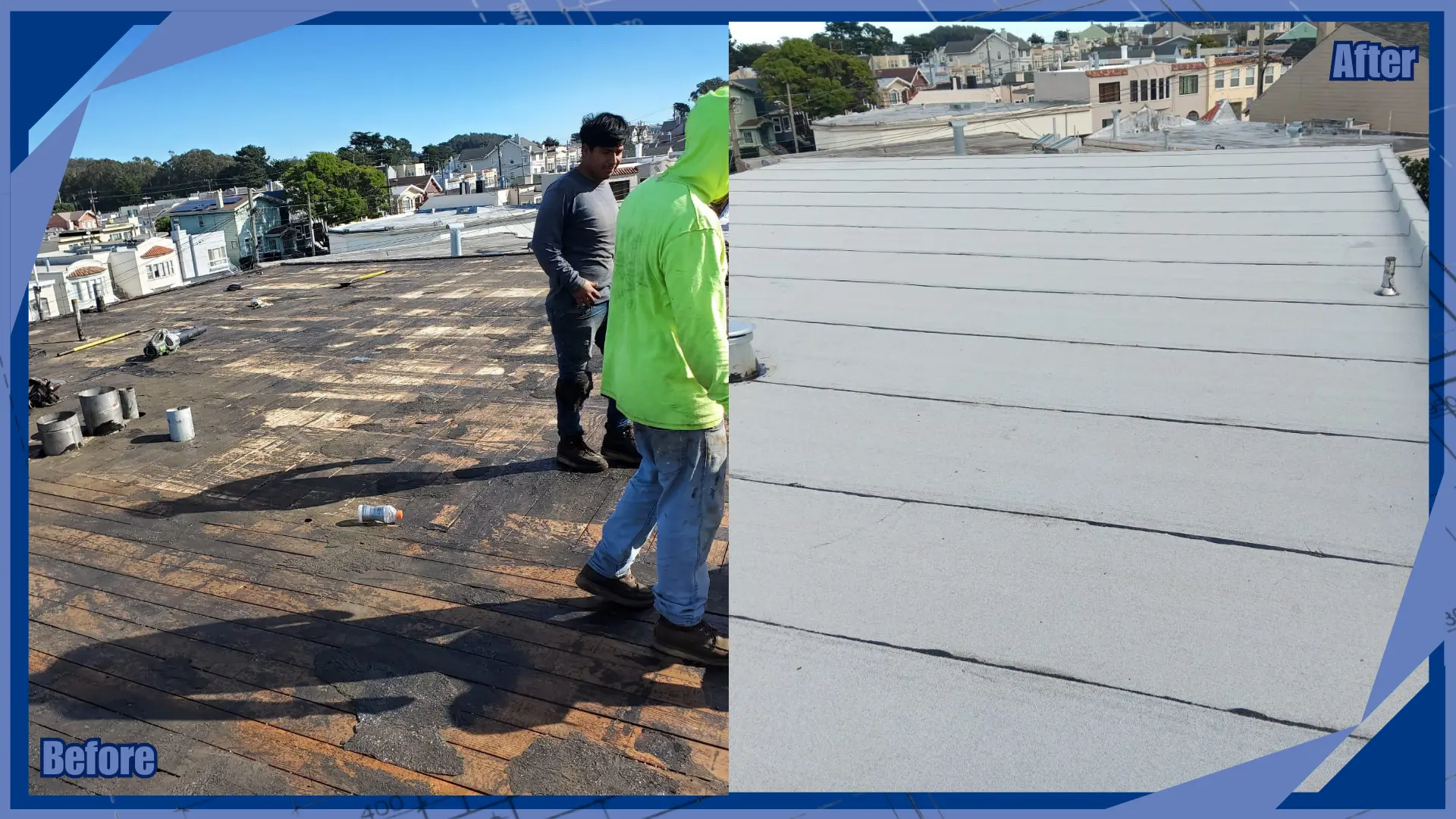
Flat and low-slope roofs are common throughout San Francisco. They can perform well when drainage, membranes, seams, and edge details work together. They can also suffer when moisture remains after the rest of the city dries.
Fog can leave a thin film across a flat roof. If drains clog with leaves or debris, that film can collect into low areas. Repeated wetting can strain seams, soften coatings, and reveal weak spots around vents or parapet walls.
How fog affects roofs in San Francisco becomes especially clear on flat roofs because drying time matters. A damp morning roof has less time to recover before the next cycle.
Fog arrives, moisture settles, drainage responds, and materials either dry properly or carry that moisture forward.
Hidden Leaks Begin Before Stains
A ceiling stain usually appears late in the story. Water may already have moved through flashing, underlayment, decking, framing, or insulation before you notice anything indoors.
Persistent fog can expose weaknesses because it keeps vulnerable areas damp. A small seam opening or cracked sealant may allow moisture to enter slowly, especially during repeated wet weather. That is one reason coastal roof damage in San Francisco can stay hidden.
Coastal roof damage in San Francisco often follows this patient pattern. For older homes, coastal roof damage in San Francisco may show up first in fasteners and flashing. The roof may let small amounts of moisture travel into hidden spaces until wood darkens, fasteners rust, or interior finishes finally show a mark. Water follows patience.
Roof maintenance interrupts that path before it becomes expensive.
Real San Francisco Roof Stories Start Small
Picture a homeowner in the Outer Sunset who notices moss spreading near the back roof slope. The shingles still look intact from the street. During inspection, the larger issue turns out to be shaded moisture retention near a clogged gutter and worn flashing.
Now picture a flat roof in the Mission where small ponding marks form near a drain. The membrane still has service life left, but fog and debris keep one section damp longer than the rest. Addressing the low spot can help protect the membrane and shows how fog affects roofs in San Francisco.
A Marina District homeowner may see rust around a vent collar before any leak appears. That small detail protects much more than its size suggests. These examples show why how fog affects roofs in San Francisco deserves practical attention.
The roof often gives quiet clues before it gives loud problems.
Let’s Protect the Roof Above Your San Francisco Home
Get in touch with San Francisco Roofing Contractors and identify San Francisco roof weather damage before moisture has more time to move. Let’s check moss, algae, flashing, drainage, penetrations, salt exposure, and hidden leak risks with clear next steps. Let’s help your roof stay built for Bay weather, season after season.