
Walk a flat roof after a wet San Francisco week, and the surface rarely tells the whole story. Small areas of ponding, aging seams, tired flashing, or repeated patches can reveal more than the membrane’s age.
When comparing roof coating vs replacement, the key question is not which option costs less today. It is whether the existing roof remains structurally sound and suitable for restoration. A coating can extend the useful life of an eligible roof, but it cannot correct a severely deteriorated membrane, saturated insulation, or structural problems underneath.
That distinction matters in San Francisco, where older buildings, coastal moisture, rooftop equipment, and complicated drainage can affect how flat roofs age. The right decision starts with understanding what is happening below the surface.
What Is The Difference Between A Roof Coating And Replacement?
A roof coating is a protective layer applied over an existing roofing system. Depending on the product and existing roof, coatings can add waterproofing, UV protection, and another layer of protection without removing the entire roof assembly.
Full replacement removes the existing roofing system and installs a new assembly. That provides an opportunity to address damaged decking, wet insulation, failed flashing, drainage problems, and other conditions that a coating cannot fix.
The distinction is important because a coating works with the roof underneath it. If that underlying system has already failed extensively, covering it does not solve the original problem.
Roof Coating Vs Replacement: Which Condition Calls For Each?
The condition of the existing roof should guide the decision more than its age.
| Existing Roof Condition | More Likely Approach |
| Membrane remains structurally sound | Coating or restoration may be considered |
| Isolated surface deterioration | Repair and possible coating |
| Localized flashing problems | Repair before restoration |
| Persistent ponding | Correct drainage before coating |
| Widespread membrane failure | Replacement may be appropriate |
| Wet insulation beneath the membrane | Replacement or targeted removal |
| Significant deck deterioration | Replacement may be necessary |
| Repeated repairs with recurring leaks | Full evaluation before choosing |
The National Roofing Contractors Association notes that an existing roof needs evaluation of its condition and structure before determining whether restoration or replacement makes sense.
When A Coating Can Make Sense
A coating may be worth considering when the existing membrane remains intact and the roof assembly is dry and structurally viable. NRCA guidance specifically identifies structurally viable, dry roof systems as potential candidates for coating and restoration.
A professional evaluation should still check adhesion, existing damage, moisture, seams, flashing, and drainage before coating begins.
For example, a low-slope roof in the Sunset District may have years of useful service remaining despite surface weathering. If the underlying system remains sound, restoration could be worth investigating rather than automatically removing the entire roof.
When Full Replacement Makes More Sense
Replacement becomes more relevant when deterioration extends beyond the surface.
Repeated leaks can indicate that moisture has moved into insulation or decking. Failed seams across multiple areas may indicate broader membrane deterioration. Significant structural problems cannot be corrected simply by applying another protective layer.
The same applies when previous repairs have accumulated without solving the underlying cause. A roof with several generations of patches may require a more comprehensive evaluation.
How San Francisco Conditions Affect Flat Roof Restoration
San Francisco’s neighborhoods place different demands on low-slope roofing systems.
In the Sunset District and Outer Richmond, fog and wind-blown debris can contribute to drainage problems. A drain surrounded by leaves or other debris can leave water sitting on the roof longer than intended.
Commercial and mixed-use buildings around SoMA and the Financial District often have another complication. HVAC curbs, vents, pipes, and other equipment create numerous membrane penetrations that require careful detailing.
In Potrero Hill and Dogpatch, flat roofs may share space with mechanical equipment and service pathways. Foot traffic and repeated equipment work can gradually affect vulnerable areas.
Water follows patience. A small drainage or flashing problem can remain unnoticed while moisture repeatedly works through a weak point.
What About Silicone Roof Coating?
A silicone roof coating is one type of liquid-applied restoration system. Silicone coatings can provide UV protection and resistance to ponding water when the product and existing roof are suitable.
That does not mean silicone should simply be applied over any aging roof. The existing surface needs proper preparation, and compatibility, adhesion, moisture conditions, and substrate condition all matter.
Ponding also deserves careful attention. Some silicone systems can tolerate ponding water, but the underlying drainage problem still deserves investigation. Manufacturers may have specific requirements for application over roofs with poor drainage.
How Much Does Roof Coating Cost Compared With Replacement?
There is no useful universal answer to roof coating cost because project conditions vary considerably.
The size of the roof, existing membrane, preparation requirements, repairs, access, coating thickness, and number of penetrations can all affect the scope. Replacement introduces additional considerations, including tear-off, disposal, insulation, decking, new membrane installation, and flashing.
A coating estimate should therefore explain what preparation and repairs are included. A low price may mean very little if the roof was not properly evaluated beforehand.
The better comparison is between the complete scope of each option, not simply the upfront price.
How To Decide If Your Flat Roof Is A Coating Candidate
A professional evaluation should answer several basic questions before anyone recommends restoration.
Is the roof structurally sound? A coating cannot restore deteriorated decking or structural components.
Is moisture trapped underneath? Wet insulation or concealed moisture can change the entire project.
Are the seams and membrane intact? Widespread failure points toward a different solution.
Does water drain properly? Recurring ponding should be investigated rather than simply covered.
Are flashing and penetrations serviceable? Rooftop equipment and transitions often need separate repairs.
What is the maintenance history? Previous patches can reveal recurring weaknesses.
Homeowners should not climb onto a roof to answer these questions themselves. Roof surfaces can contain fall hazards, weak areas, equipment, and other risks. A qualified roofing professional should handle roof-level inspection and testing.
How Often Should A Flat Roof Be Recoated?
There is no universal schedule for when to recoat a flat roof. Coating intervals depend on the specific product, application thickness, roof condition, exposure, and maintenance history.
A coating should be evaluated before the existing protective layer deteriorates significantly. Waiting until widespread failure appears can limit restoration options.
Regular professional inspections provide a better basis for deciding when another coating is appropriate than relying on a calendar date alone.
Frequently Asked Questions
Can A Roof Coating Fix A Leaking Flat Roof?
Sometimes, but only when the underlying roof remains suitable for restoration. A coating may address certain surface and waterproofing concerns, but it cannot correct extensive structural deterioration or saturated materials.
The source of the leak should be identified first.
Does A Roof Need To Be Dry Before Coating?
Preparation requirements depend on the specific coating system and substrate. Moisture can affect adhesion and performance, so the existing roof needs to be evaluated and prepared according to the product requirements.
Professional installers should verify these conditions before application.
Is Roof Coating Better Than Replacement?
Neither option is automatically better. Coating can make sense for a sound roof that needs restoration, while replacement may be more appropriate when deterioration extends into the membrane, insulation, or structure.
The condition of the existing system should determine the approach.
Can A Coating Stop Ponding Water?
Some coating products provide strong resistance to ponding water, but coating does not necessarily correct why water remains on the roof. Drainage problems should still be investigated.
Persistent ponding can indicate blocked drains, inadequate slope, or other underlying conditions.
How Can I Tell If My Flat Roof Needs Replacement?
Recurring leaks, widespread membrane deterioration, wet insulation, damaged decking, and repeated repairs can all justify a closer evaluation.
A professional inspection can distinguish localized problems from deterioration affecting the broader roof system.
What We’d Tell A Neighbor
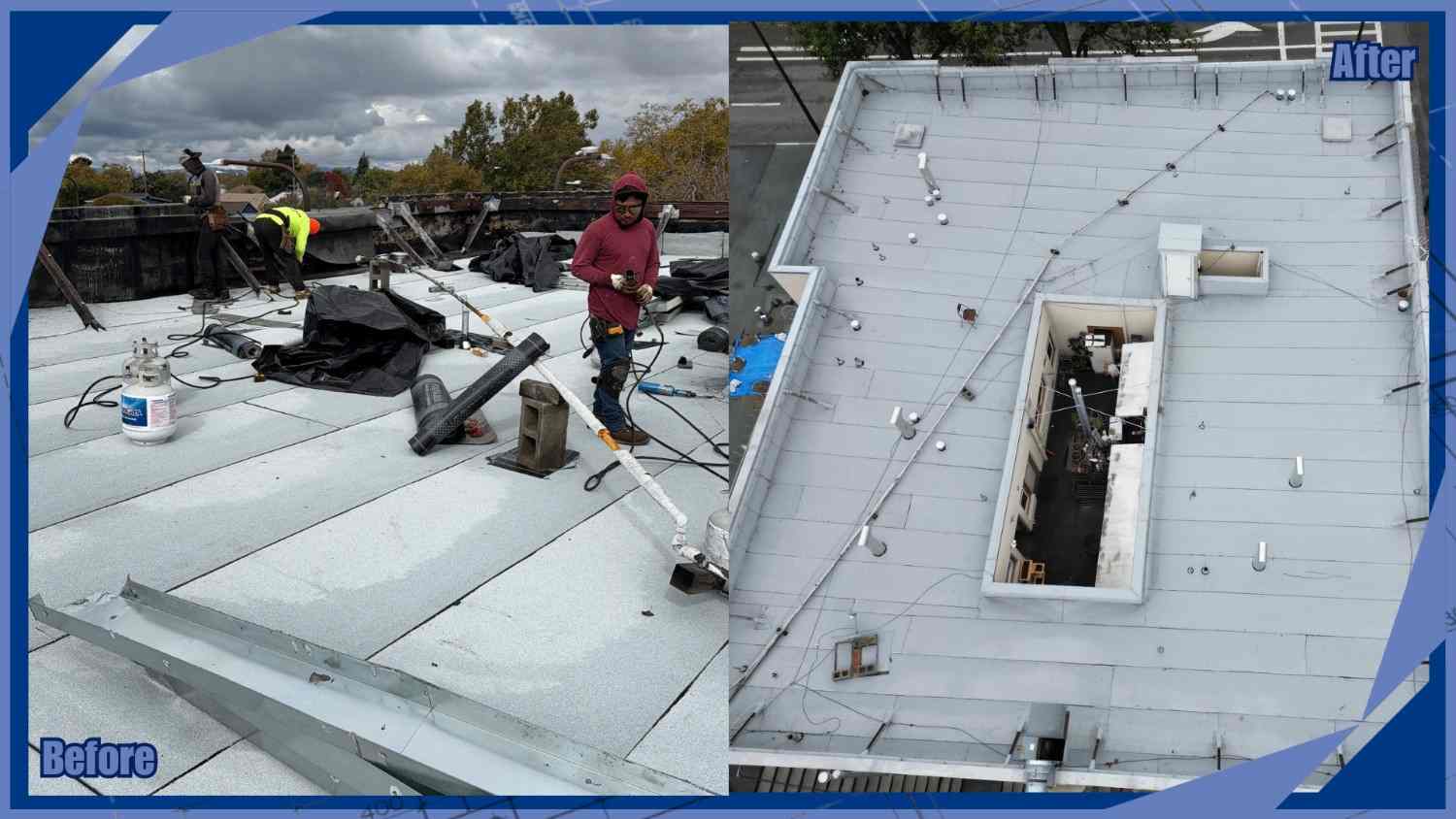
Do not choose between coating and replacement simply because one option appears easier. First find out whether the roof underneath is still worth preserving.
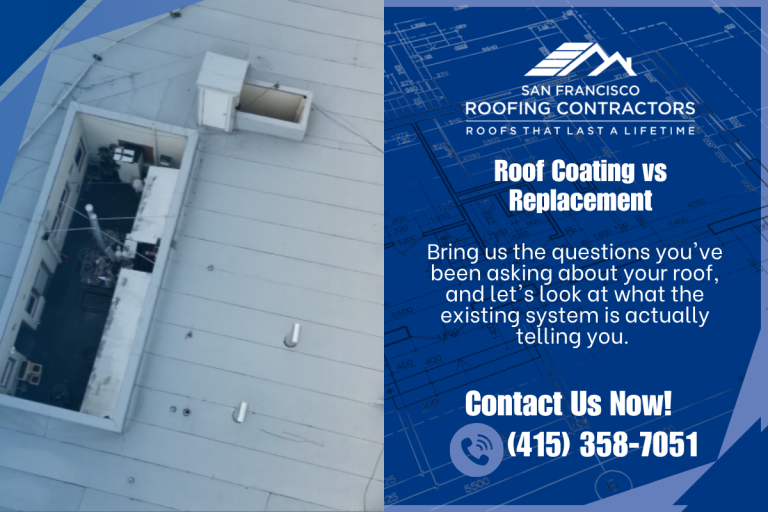
If you’re weighing roof coating vs replacement, San Francisco Roofing Contractors can evaluate the existing system, drainage, moisture conditions, and visible problem areas before you commit to either approach. Bring us the questions you’ve been asking about your roof, and let’s look at what the existing system is actually telling you.