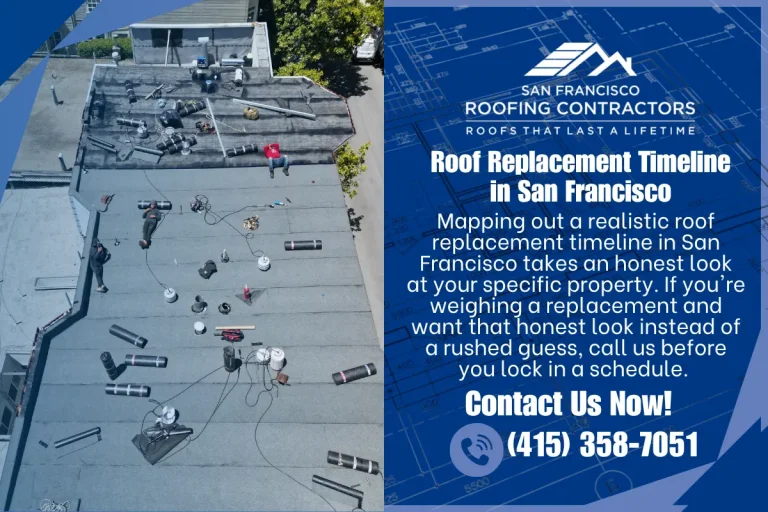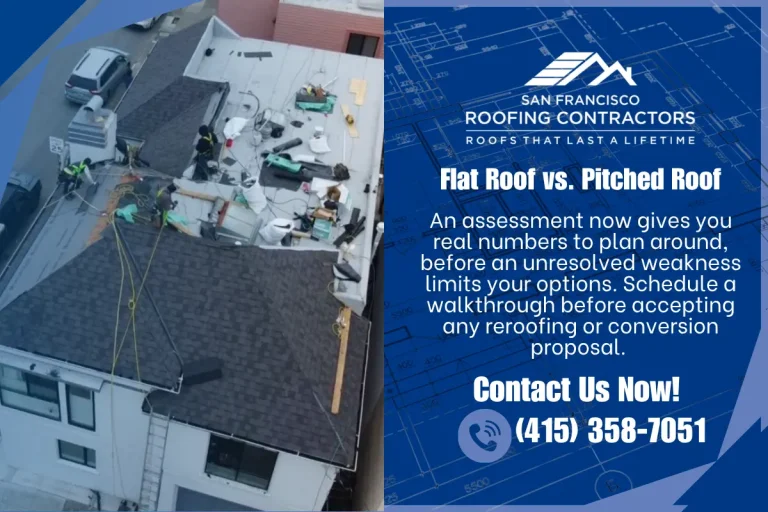

A rooftop crew checking a flat membrane in July will find it dry by mid-morning. Check that same membrane in January, and dew can linger on the surface well past noon.
That difference is the whole answer to timing a commercial roof coating. The best time for roof coating in San Francisco falls within the dry season, roughly May through September, when overnight moisture burns off early and the substrate stays dry long enough to cure properly. A coating’s dry-to-recoat window is the stretch after application when the surface must stay free of rain, dew, or foot traffic to bond correctly. Apply outside that window, and the coating can blister, delaminate, or fail to reach its rated thickness. Getting the season right matters more than getting the exact week right, and understanding why takes a closer look at both the product and the climate.

What Weather Conditions Does a Roof Coating Actually Need?
Most acrylic and silicone coatings require ambient and surface temperatures between roughly 50°F and 90°F during application, according to manufacturer technical data. GAF’s high-solids silicone coating specification is rated for California’s Title 24 cool roof standards, with cure performance that depends on maintaining stable surface conditions after application, per GAF’s technical data sheet. Surface temperature and air temperature aren’t always the same number, either. A membrane sitting in direct sun can run well above the surrounding air temperature, even on a mild morning, which is why crews check the roof surface directly rather than trusting a weather app alone. Roof coating application weather isn’t only about temperature. Humidity and dew point matter just as much, since a coating applied over a damp membrane rarely bonds the way the manufacturer intended, even if the air temperature looks fine on paper.
Why Does San Francisco’s Dry Season Matter for Scheduling This Work?
San Francisco’s rainy season typically runs from November through March, with rainfall unlikely between April and October, according to the National Park Service’s overview of the city’s Mediterranean climate. Dry season roof coating relies on that long stretch of stable weather to give a product its full cure window without interruption. Commercial roof maintenance timing built around this pattern also gives crews room to reschedule if an unexpected system moves through, something a compressed winter window rarely allows. Property owners in San Francisco’s Potrero Hill and Dogpatch corridor, where flat industrial and mixed-use roofs are common, tend to see the clearest benefit from planning coating work months ahead rather than reacting to a leak. A building manager who books the work early also has more room to negotiate scaffolding, staging, and access around tenants.
Does Fog Complicate Summer Applications, Even in the Dry Months?
Yes, and this is where San Francisco differs from most cities that simply recommend a summer window. Morning fog can leave membranes damp well past sunrise in fog-belt neighborhoods, even during peak dry season. In Potrero Hill and Dogpatch, flat and low-slope roofs collect moisture around membrane seams and HVAC or vent penetrations before the rest of the surface has dried. Details decide durability here: a crew that tests moisture at the seams before starting, not just across the open field, avoids trapping dampness under a fresh coat. Waiting an extra hour for the fog to burn off costs far less than recoating a section that failed to bond.
Does the Roof System Change the Timing?
It can. Modified bitumen roofs behave differently than built-up or single-ply systems once a coating goes down. Seams, not the open field, are typically where a modified bitumen roof fails first, so those areas need extra drying time and closer inspection before coating begins. A crew working a modified bitumen roof in Potrero Hill or Dogpatch will often prime and test seams a day ahead of the main application, rather than treating the whole roof as one uniform surface. Skipping that step is a common reason coatings fail early, regardless of how favorable the weather looked that day.
What Happens if a Coating Gets Rained on Before it Cures?
An early, unexpected shower can wash out uncured coating, leave a chalky residue, or create uneven film thickness that shows up as premature wear within a year or two. This is why experienced crews build in a buffer before and after application, checking the extended forecast rather than the day’s forecast alone. If rain does hit an uncured section, the fix usually means sanding or pressure-washing the affected area and reapplying once it dries completely, which adds both time and cost that proper scheduling would have avoided. Reflective coatings also carry energy benefits worth factoring into the schedule. A cool roof coating can lower surface temperatures significantly compared with a dark, uncoated roof, according to ENERGY STAR’s guidance on cool roof performance. Timing the application right protects both the cure quality and the reflective performance the coating is meant to deliver.
Frequently Asked Questions
What is the best time for roof coating in San Francisco? Late spring through early fall, roughly May through September, offers the most consistent dry weather for coating application. This window minimizes the risk of rain or heavy dew interrupting the cure process before it finishes.
Can you apply a roof coating during San Francisco’s foggy months? It’s possible, but morning fog often delays how early a crew can start, since the membrane needs to be fully dry before application begins. Afternoon starts are common during fog-heavy stretches, particularly along the coast.
How long does a commercial roof coating need to cure? Cure times vary by product and are listed on the manufacturer’s technical data sheet, but most coatings need at least 24 hours of stable, dry roof coating application weather after application to bond properly.
Does San Francisco’s rainy season rule out roof coating work entirely? Not entirely, but it narrows the safe windows considerably. Crews working during the rainy season need a longer buffer around the forecast and more flexibility to reschedule if conditions shift.
Before You Book the Crew
If you’re planning a commercial roof coating, we’d tell you the same thing we tell every property owner: the season matters more than the calendar date. A coating applied in a rushed window, ahead of an early rain or under lingering morning fog, rarely performs the way the product data sheet promises. Waiting a few extra weeks for a stable dry stretch costs less than recoating a section that failed early, and it protects the reflective performance you’re paying for in the first place. If your roof is due for a coating and you want a straightforward read on timing, call us before you lock in a schedule.