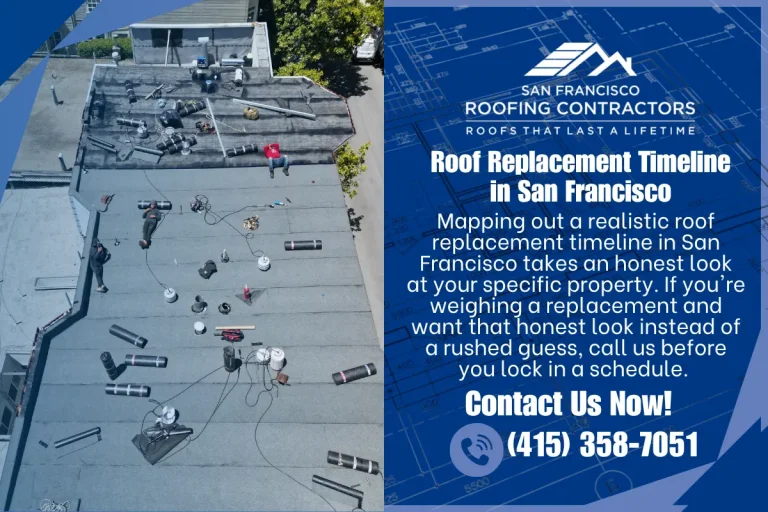

Pull back the first few tiles on an older roof, and the plywood underneath sometimes tells a different story than the tiles above it. What looked like a straightforward tear-off can turn into a scope conversation before lunch.
That gap between the estimate and the reality is what actually drives a roof replacement timeline in San Francisco. Most straightforward residential replacements take three to seven working days once the crew starts, but the honest total includes what happens before that: permitting, material lead times, and whatever the roof reveals once the old surface comes off. Scope creep is what happens when hidden damage, deteriorated underlayment, or drainage problems expand a project beyond its original estimate. Understanding what commonly causes delays, rather than assuming a fixed calendar date, is what lets a homeowner plan realistically instead of guessing.
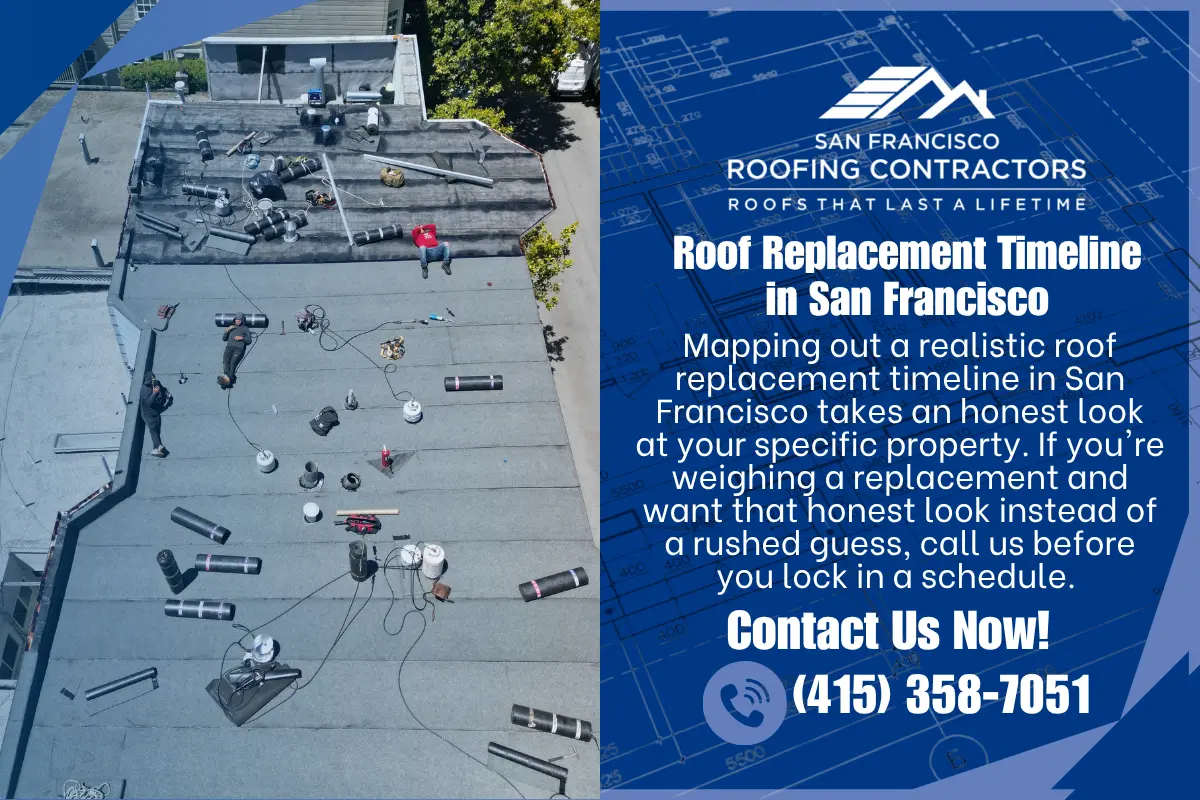
Does the Existing Roof Need More Work Than Expected?
A tear-off is the first real inspection a roof gets in years, and it often finds more than the surface suggested. Deteriorated decking, saturated underlayment, or flashing that was patched rather than replaced can all change the scope once the crew is already on-site. A contractor who mentions this possibility upfront isn’t hedging, they’re describing how roofs actually behave once the surface layer comes off.
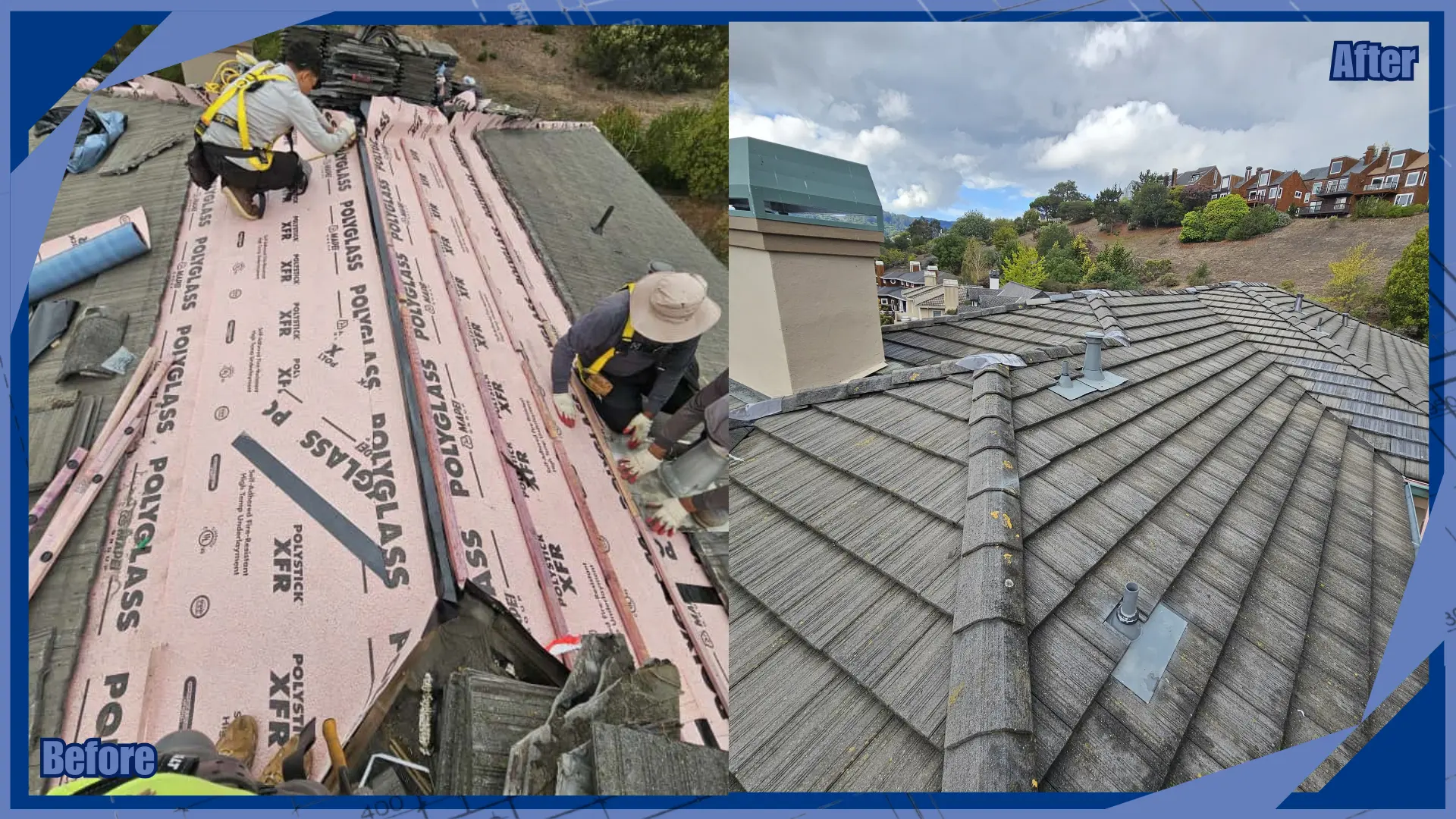
This shows up clearly on tile roofs. Underlayment often fails decades before the tile itself shows wear, which means a tile roof can look structurally sound from the ground while the layer protecting the decking has already given out. Hidden work that matters rarely shows up in a walk-around estimate, and accounting for it upfront is part of any honest roof replacement process steps discussion. A homeowner who budgets a small contingency for this possibility avoids the frustration of an unexpected change order mid-project.
How Does San Francisco Weather Affect the Schedule?
San Francisco’s rainy season typically runs from November through March, with rainfall unlikely between April and October, according to the National Park Service’s overview of the city’s Mediterranean climate. A tear-off exposes decking to the elements, so crews avoid starting work when rain is forecast within the drying window. Wind and persistent fog can also affect certain adhesive and torch-applied materials, which need specific temperature and moisture conditions to bond correctly. A project started in late October carries more weather risk than the identical project started in June, even with the same crew and materials. Scheduling around these windows, not just around the crew’s calendar, is part of realistic planning.
Will Permits Affect When Work Can Start?
Most reroofing work in the city requires a permit through the Department of Building Inspection, and simple residential projects can often be reviewed over the counter, according to SF.gov’s guidance on OTC permits. Requirements vary by project and property, and older buildings or projects involving structural changes may need a longer in-house review. San Francisco roofing permits are rarely the longest part of a straightforward replacement, but skipping the step or assuming it isn’t needed is one of the most common causes of an avoidable delay. Confirm what your specific project requires, and whether your contractor is registered to apply on your behalf, before setting a start date.
Do Access and Property Logistics Slow Things Down?
San Francisco’s dense, older neighborhoods create logistical questions that suburban projects rarely face. In San Francisco’s Noe Valley and the Mission, shared-wall rowhouses with narrow light wells mean drainage from one roof is sometimes tied to a neighboring structure, which can require extra coordination before work begins. Narrow streets, limited parking, and tight side-yard access can all affect how quickly material gets from the truck to the roof. A property in Noe Valley with restricted street access may need a different staging plan than one with a driveway, and that plan should be settled before the crew arrives, not worked out on the first morning of the job.
Can Roof Design or Material Availability Add Time?
A simple gable roof and a roof with multiple slopes, skylights, dormers, and drainage features rarely install on the same schedule, even at the same square footage. More penetrations mean more flashing details, and each one takes time to get right rather than being rushed to hit a deadline. Material availability is a separate variable entirely. Choosing a material doesn’t guarantee immediate installation, since specialty tile, custom metal profiles, or specific color runs can carry lead times measured in weeks rather than days. Confirming material availability before finalizing a start date avoids one of the more common and avoidable delays, especially for homeowners set on a less common finish.
Frequently Asked Questions
How long does a new roof take to install in San Francisco? Most straightforward residential tear-offs take three to seven working days once the crew begins, though weather, roof complexity, and material lead times can extend that window considerably.
What are the biggest causes of roof replacement delays? Hidden deck or underlayment damage, permit requirements, weather windows, and material lead times are the most common causes, and they often overlap on a single project rather than appearing one at a time or in isolation.
Do I need a permit to replace my roof in San Francisco? Most reroofing projects require a permit from the Department of Building Inspection. Simple residential projects can often qualify for over-the-counter review, though this varies by property and scope.
What can I do before work starts to avoid delays? Confirm material availability, clarify scope in writing, understand your permit requirements, and prepare street or driveway access before the crew is scheduled to begin work.
Our Honest Take, Before You Book a Date
If you’re planning a roof replacement, we’d tell you the same thing we tell every homeowner: build in room for what the tear-off reveals. A quote based only on what’s visible from the ground is a starting point, not a guarantee. Ask what happens if the crew finds deteriorated decking, confirm your permit status before committing to a date, and get a straight answer about material lead times. Mapping out a realistic roof replacement timeline in San Francisco takes an honest look at your specific property. If you’re weighing a replacement and want that honest look instead of a rushed guess, call us before you lock in a schedule.