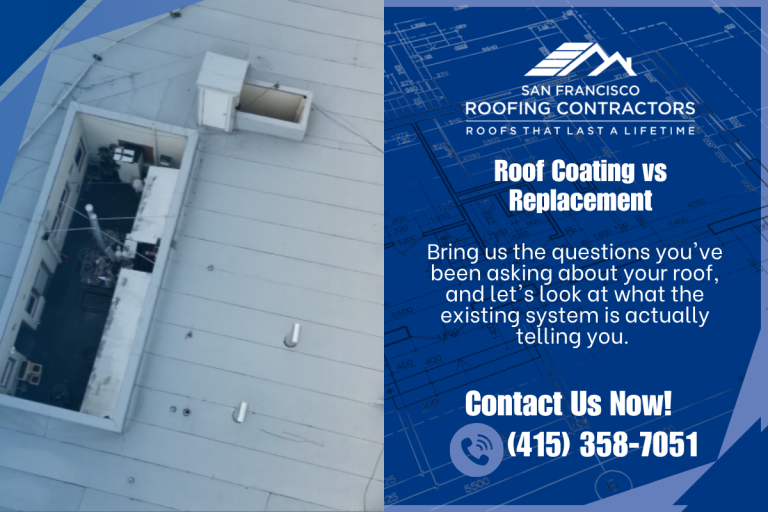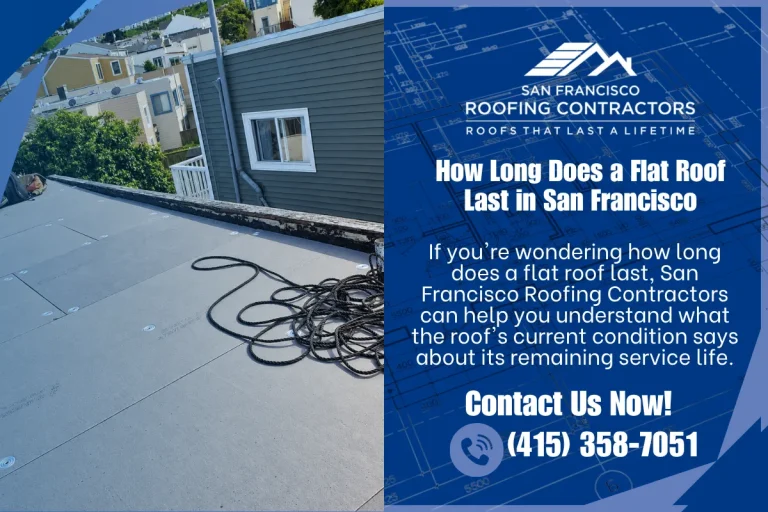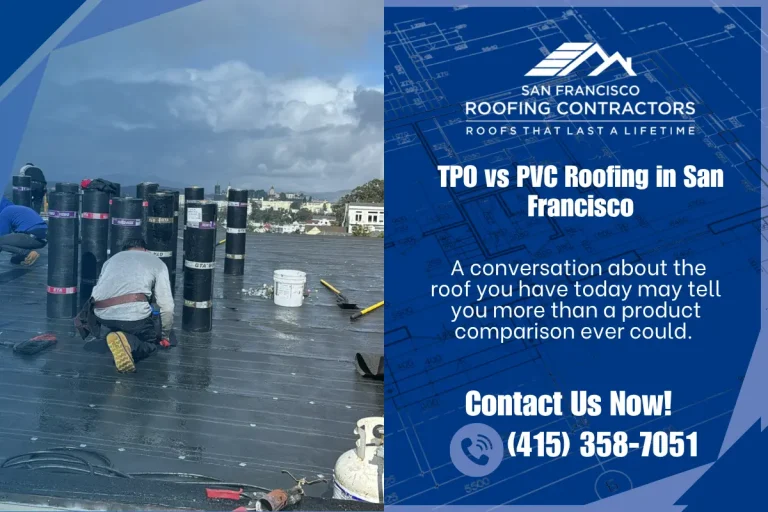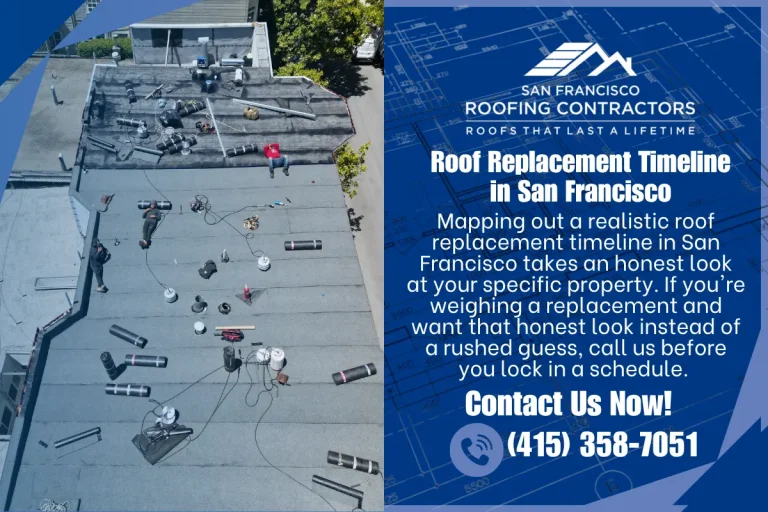

Stand on an older flat roof and the first thing you notice is rarely the membrane itself. Drains, seams, rooftop equipment, flashing, and areas of standing water usually tell you more about its condition.
So, how long does a flat roof last? A well-designed and properly maintained low-slope roof can often serve for decades, but there is no universal expiration date. The membrane type matters, yet installation quality, drainage, maintenance, exposure, and the condition of the roof assembly matter just as much.
San Francisco adds another layer. Coastal moisture, fog, wind, older buildings, and complicated rooftop layouts can influence how roofing systems age. A flat roof near Ocean Beach may experience different conditions from one in SoMA or Potrero Hill.
What Determines A Flat Roof’s Service Life?
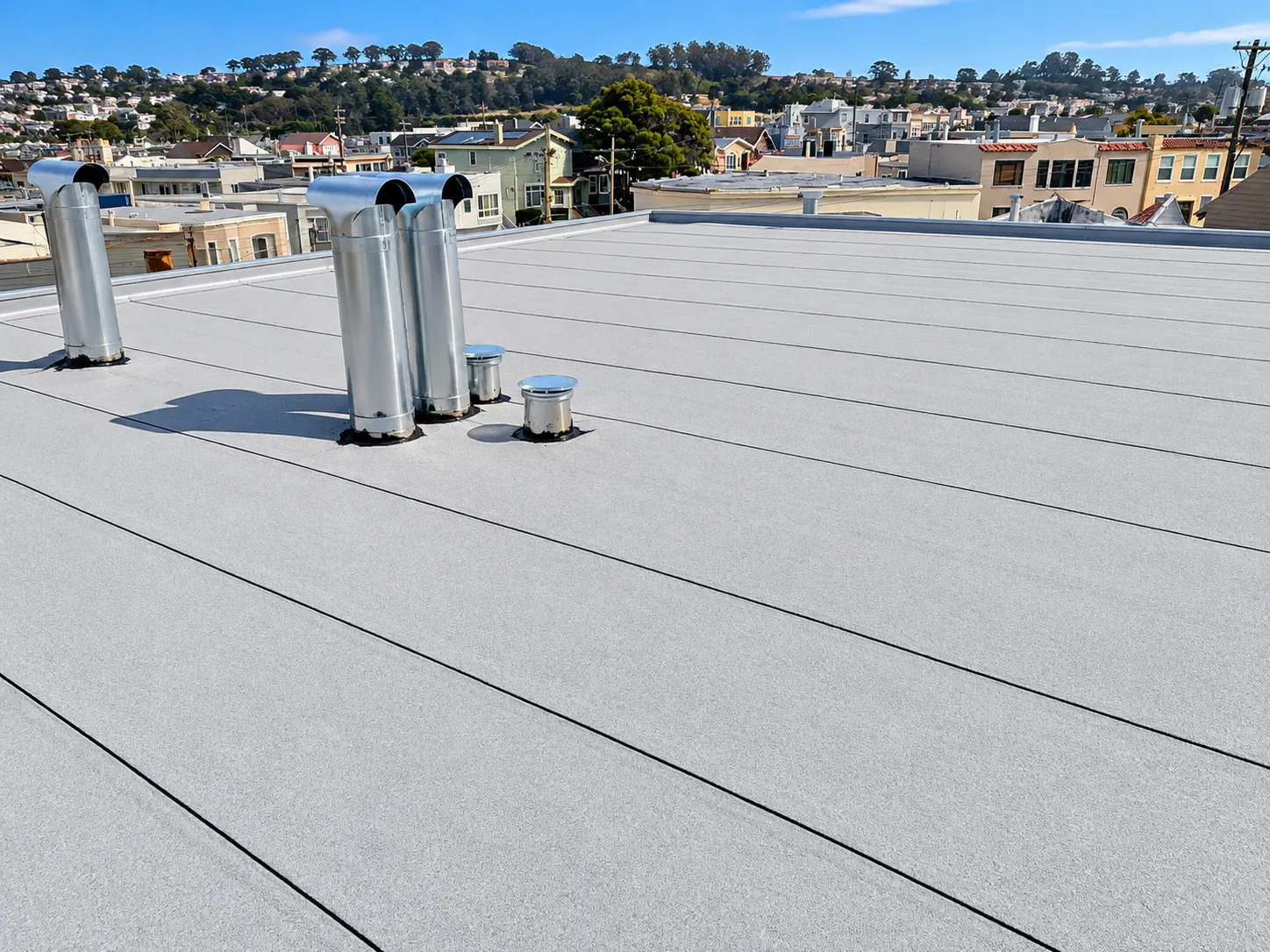
A flat roof is a system, not simply a waterproof sheet. The membrane sits above insulation and a structural deck, while drains, flashing, penetrations, and edge details manage water around it.
That means the flat roof lifespan depends on how these components work together.
A roof with excellent materials can still develop problems when water repeatedly ponds around a drain. Likewise, a membrane may remain serviceable even when an isolated flashing detail needs repair.
Maintenance matters, too. The National Roofing Contractors Association emphasizes inspection and maintenance as important parts of optimizing roof service life.
How Long Does A Flat Roof Last With Different Materials?
Different low-slope roofing systems age differently. However, manufacturers and industry sources generally treat properly installed and maintained commercial single-ply systems as long-term roofing assemblies rather than short-term products.
| Roofing System | What Affects Longevity Most | Typical Considerations |
| TPO | Seams, penetrations, thickness, installation, drainage | Reflective, heat-welded membrane |
| Modified Bitumen | Seams, surface wear, drainage, maintenance | Multi-layer asphalt-based system |
| PVC | Seams, penetrations, chemical exposure, installation | Heat-welded thermoplastic membrane |
| Built-Up Roofing | Surface condition, flashing, drainage | Multiple reinforcing layers |
These categories should not be treated as fixed lifespan guarantees. Product thickness, assembly design, climate, workmanship, and maintenance can substantially change performance.
TPO Roofs
TPO has become a widely used low-slope roofing membrane. It uses heat-welded seams and offers flexibility, UV resistance, and weather resistance.
GAF’s field research has also found TPO roofs between eight and sixteen years old continuing to perform well against current material standards. Some TPO systems carry guarantees extending to 20, 25, or 30 years depending on the product and system.
That does not mean every TPO roof reaches the same age. A roof with poorly maintained drains or damaged penetrations can develop problems much sooner.
Modified Bitumen Roofs
Modified bitumen uses polymer-modified asphalt combined with reinforcing materials. It remains common on many low-slope buildings and can provide a durable multi-layer roofing assembly.
The modified bitumen roof lifespan depends heavily on the membrane system, installation, drainage, and maintenance. NRCA research on modified bitumen systems has specifically examined field performance, repair, inspection, and maintenance as factors affecting service life.
On older San Francisco buildings, the condition of existing flashing and previous repair work can be just as important as the age of the membrane.
Why Roof Age Does Not Tell The Whole Story
A flat roof can reach an advanced age without needing immediate replacement. Another roof of the same age may already have recurring leaks, failing seams, or damaged insulation.
The difference often comes down to how the roof has been maintained. A membrane that has been inspected regularly and repaired when problems first appeared may remain serviceable longer than one that spent years with blocked drains or neglected flashing.
Previous repairs also provide useful clues. Several patches around the same area may indicate a recurring problem rather than a series of unrelated leaks. Likewise, widespread surface deterioration suggests a different situation from one isolated damaged section.
The roof deck matters too. Water that reaches the decking can affect materials beneath the membrane, making the eventual repair more involved. That is why determining a roof’s remaining service life requires looking at the entire assembly, not simply checking its installation date.
What Usually Shortens A Flat Roof’s Life?
Age gets most of the attention, but several other conditions can accelerate deterioration.
Ponding Water
Low-slope roofs naturally drain more slowly than steep roofs. Standing water can develop because of blocked drains, surface irregularities, inadequate slope, or structural deflection. GAF notes that persistent ponding can contribute to premature membrane deterioration.
Damaged Seams
Single-ply membranes depend heavily on properly welded seams. A small seam defect can allow moisture beneath the membrane even when the surrounding surface looks intact.
Rooftop Equipment
Equipment penetrations create concentrated areas of detailing. Movement, maintenance work, and aging flashing can eventually create weak points around curbs and pipe boots.
Deferred Maintenance
Leaves, dirt, debris, and biological growth can interfere with drainage and conceal developing problems. Routine inspections make these conditions easier to identify while repairs remain manageable.
Flat Roof Maintenance Checklist For San Francisco Buildings
Good maintenance starts with noticing changes before they become larger problems. You can safely monitor several warning signs from inside or around the property, while roof-level inspections should be left to a qualified professional.
Use this checklist as a homeowner-safe starting point:
- Watch for interior stains: Check ceilings and upper walls for new discoloration, bubbling paint, or signs of moisture.
- Pay attention after rain: Notice whether leaks or damp areas appear in rooms beneath the roof.
- Keep an eye on drainage areas from the ground: If you can safely see gutters, downspouts, or other drainage components without climbing, watch for obvious blockages or overflow.
- Trim nearby vegetation when appropriate: Keep branches from rubbing against accessible roof edges, but leave roof-level work to a professional.
- Track recurring problems: Note where leaks appear and when they happen. A pattern can help identify the source during an inspection.
- Keep repair records: Save information about previous leaks, patches, inspections, and roofing work. This history can reveal recurring issues.
- Schedule professional roof inspections: Have a qualified roofing professional examine the membrane, seams, flashing, drainage, and other roof-level components.
- Do not climb onto the roof yourself: Flat roofs can still have fall hazards, fragile surfaces, hidden weak areas, and equipment that creates additional risks. Leave roof access and close-up inspections to trained professionals.
A flat roof does not need to look new to remain serviceable. What matters is recognizing changes early and having the right person evaluate what is happening before a small issue reaches the roof deck or interior.
Frequently Asked Questions
Does A Flat Roof Need To Be Replaced When It Reaches Its Expected Age?
Not necessarily. A roof’s age is useful context, but its actual condition matters more.
A well-maintained membrane with sound seams, functioning drainage, and intact flashing may continue performing beyond an expected service interval. An older roof with recurring leaks and widespread deterioration may require a different approach.
How Long Can A TPO Roof Last In San Francisco?
The TPO roof lifespan varies with membrane thickness, installation, drainage, exposure, and maintenance. Industry and manufacturer information supports long service lives for properly installed systems, with some guarantees extending to 20 years or more.
San Francisco’s moisture and rooftop conditions make inspection particularly useful for identifying localized deterioration.
Does Ponding Water Mean A Flat Roof Has Failed?
Not automatically. Some membranes can tolerate ponding better than others, but recurring standing water still deserves attention.
The cause matters. A blocked drain can be relatively straightforward to address, while structural deflection or inadequate slope may require more extensive investigation.
Can You Repair A Flat Roof Instead Of Replacing It?
Often, yes. Localized seam damage, flashing deterioration, blocked drainage, or isolated membrane damage may be repairable.
Replacement becomes more relevant when deterioration is widespread, the roof assembly has reached the end of its useful service, or repeated repairs no longer address the underlying problem.
How Often Should A Flat Roof Be Inspected?
Inspection frequency depends on the roof, building use, age, and exposure. Commercial properties with substantial rooftop equipment may need more frequent attention.
Routine inspections are particularly useful after significant weather and before small drainage or flashing issues become larger problems.
What We’d Tell A Neighbor
Don’t judge a flat roof by its age alone. Look at the drains, seams, penetrations, flashing, and areas where water tends to linger.
If you’re wondering how long does a flat roof last, San Francisco Roofing Contractors can help you understand what the roof’s current condition says about its remaining service life. Sometimes the next step is replacement. Sometimes it is a repair that buys the existing system more useful years. The roof itself usually gives you clues. You just have to know where to look.