
When you start collecting roof replacement estimates, the first number that catches your eye is usually the total price. That makes sense. A roof is a major expense, and the average cost of a new roof in San Francisco, CA can vary widely based on the home, roof slope, materials, access, and hidden repair needs.
Still, price only tells part of the story. A low estimate may leave out key details. A higher estimate may include better materials, stronger flashing, proper permits, cleanup, and a warranty that protects you long after the crew leaves.
Details decide durability. This checklist helps you compare roof replacement estimates with a clearer eye.

Why The First Number Rarely Tells The Full Story
A roof estimate should explain the work, not simply name a price. If one contractor gives you a short total and another gives you a detailed scope, you are not comparing equal proposals yet.
San Francisco homes create extra variables. A flat roof in the Outer Sunset faces different moisture patterns than a steep roof near Twin Peaks. A Victorian in Noe Valley may need careful preservation around older trim, chimneys, and wall transitions. A row house in the Mission may require tighter staging because crews have limited street access.
That is why new roof cost in San Francisco, CA depends on more than square footage. Access, disposal, underlayment, drainage, flashing, ventilation, and permit requirements can all change the real value of an estimate.
A clear proposal helps you see the hidden work that matters.
What Average Cost of a New Roof in San Francisco, CA Really Means
Average pricing can help you set expectations, but it should never replace a roof inspection. The same size roof can cost differently from one neighborhood to another because roof conditions rarely match.
A contractor should explain what they saw during the inspection. They should point out soft decking, worn flashing, ponding water, cracked pipe boots, damaged gutters, or poor ventilation. They should also tell you when a repair may serve you better than replacement.
When you compare estimates, ask what drives the number. The answer should connect directly to your roof’s condition, not a generic price range. This is where experience matters. Water often enters near transitions, penetrations, and flashing details long before the open roof surface looks damaged.
Good estimates explain those areas layer by layer.
The Scope Should Say Exactly What Will Happen
Your estimate should describe what the contractor plans to remove, repair, install, protect, and inspect. A vague line like “replace roof” leaves too much room for confusion.
Look for details about tear-off, decking inspection, underlayment, flashing replacement, ventilation, drainage, gutters, skylights, chimneys, and roof penetrations. If your home has a flat or low-slope roof, the scope should address drainage and ponding water directly.
Scope matters because roof replacement cost in San Francisco, CA often changes when crews uncover damaged decking or outdated flashing. A good estimate explains how those discoveries will be handled. It should also state whether wood replacement is included, priced separately, or approved before work continues.
You should know the plan before anyone starts opening your roof.
Materials Should Match the Roof and the City
Materials shape how your roof performs over time. In San Francisco, that means choosing products that can handle moisture, fog, salt exposure, and repeated temperature shifts.
Your estimate should name the roofing material, manufacturer, product line, underlayment, flashing metal, fasteners, sealants, and ventilation components. It should also explain why those materials fit your roof type.
For example, a shingle system needs proper attic ventilation and flashing details. A flat roof needs strong membrane installation, drainage planning, and careful work around penetrations. Tile, metal, modified bitumen, and membrane systems all behave differently under Bay weather.
If one estimate lists specific materials and another only says “roofing materials,” ask for more detail. You cannot compare quality when one proposal hides the ingredients.
New roof cost in San Francisco, CA should reflect the system being installed, not just the surface you can see from the street.
Warranties Should Explain Both Product and Workmanship
A warranty can sound reassuring until you read the fine print. Some warranties only cover the material. Others include workmanship for a limited period. Some require proper ventilation, approved installation methods, and maintenance records.
Ask each contractor to explain the manufacturer warranty and the labor warranty. You should know who handles a future issue, how long coverage lasts, and what can void the warranty.
This matters because many leaks do not come from defective shingles or membranes. They come from installation details around valleys, skylights, vents, walls, and chimneys. The missing shingle is not always the whole story. Water follows patience.
A strong estimate should show that the contractor understands long-term performance, not only installation day appearance.
Cleanup And Protection Should Be Written Down
Roofing work affects more than the roof. Crews move materials, remove debris, set ladders, protect landscaping, and manage nails around driveways, walkways, and neighboring properties.
Your estimate should describe debris removal, daily cleanup, magnetic nail sweeping, dump fees, property protection, and final site review. In dense San Francisco neighborhoods, cleanup can be especially important because homes often sit close together.
Ask how the contractor protects siding, windows, decks, patios, and shared spaces. If your property has limited access, steep stairs, or nearby vehicles, the estimate should account for that.
A cleaner jobsite usually reflects a more organized project. It also shows respect for the home underneath the work.
Permits And Insurance Should Never Feel Optional
A roof replacement estimate should clearly address permits when they apply. San Francisco has specific building requirements, and responsible contractors do not treat permits as an afterthought.
Ask whether the estimate includes permit costs, who pulls the permit, and how inspections will be handled. You should also confirm that the contractor carries proper licensing, liability insurance, and workers’ compensation coverage.
This is not paperwork for paperwork’s sake. Insurance protects you if something goes wrong on your property. Permits help confirm that the work meets local requirements. Older homes, multi-unit buildings, and historic properties may need extra care before work begins.
If one estimate skips these items, the lower price may not reflect the true risk.
Timeline Should Include More Than A Start Date
A good timeline explains preparation, material ordering, expected workdays, inspections, cleanup, and weather flexibility. San Francisco roofing crews must respect the city’s changing conditions. Fog, wind, rain, and access restrictions can affect scheduling.
Ask how the contractor protects your home if weather interrupts the project. Temporary dry-in procedures matter, especially during wet seasons or on flat roofs.
The estimate should also explain how you will receive updates. You should know who to call, when materials arrive, and what happens if crews find hidden damage.
Roof replacement cost in San Francisco, CA should include the planning needed to complete the work responsibly. A fast schedule means little if the roof is left vulnerable between steps.
Compare The Assumptions, Not Just the Totals
Once you have several estimates, place them side by side and compare assumptions. Which one includes flashing replacement? Which one includes permits? Which one names the underlayment? Which one explains decking repairs? Which one describes cleanup?
This approach turns pricing into a decision-making guide. You stop asking, “Which roof is cheapest?” and start asking, “Which roof is best explained?”
You may find that one proposal leaves out major work. You may also find that a higher estimate includes details that reduce future repair risk. New roof cost in San Francisco, CA makes more sense when every contractor prices the same scope.
The clearest estimate is often the one that teaches you something about your own home.
Real-Life Estimate Scenarios San Francisco Homeowners Face
Picture a homeowner in the Richmond District comparing two flat roof estimates. One proposal lists only membrane replacement. The other includes slope correction, drain inspection, edge metal, and new flashing around a skylight. The second estimate costs more, but it addresses the places where fog and standing moisture usually create trouble.
Now picture a homeowner in Bernal Heights with an older shingle roof. One estimate includes new flashing at wall transitions. Another reuses the existing flashing to keep the price lower. Reusing flashing may work in some situations, but it can also carry old weaknesses into a new system.
These details affect the average cost of a new roof in San Francisco, CA because they affect how the roof performs after installation. A roof should not only look finished. It should be built to weather another season, then another, then another.
That is stewardship over shortcuts.
Choose The Estimate That Protects What Comes Next
A good roof estimate should make you feel informed, not pressured. It should explain materials, scope, warranty, cleanup, permits, insurance, timeline, and the reasoning behind the price.
You do not need to become a roofing expert to make a smart decision. You only need enough clarity to see whether the contractor understands your home, your roof type, and your local conditions.
Choose the contractor who explains the work clearly. Choose the proposal that accounts for hidden details. Choose the roof built for Bay weather.
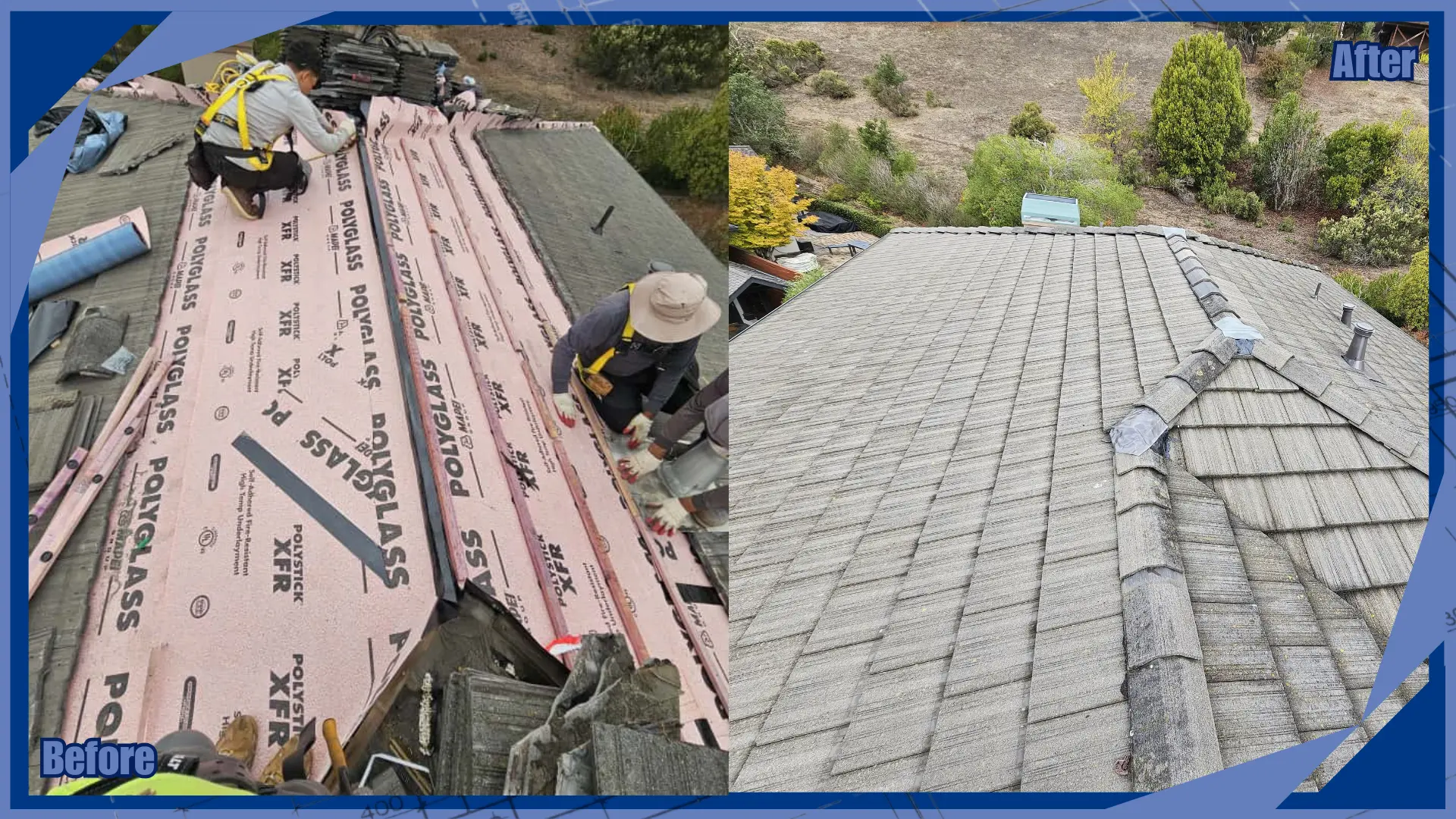
Let’s Read The Estimate Together
Get in touch with San Francisco Roofing Contractors to compare your roof replacement estimate and make the average cost of a new roof in San Francisco, CA easier to understand. Let’s review the scope, materials, warranty, permits, insurance, cleanup, and timeline before you make a final decision. Let’s protect your San Francisco home with a roof plan built for the city above it.