
A single water stain over a bay window rarely explains itself. Walk the roofline above it, and the real story is usually somewhere else, a parapet cap, a valley, a vent boot several feet away.
That gap between where water shows up and where it actually enters is why roof repair vs replacement San Francisco decisions go wrong so often. Knowing when to repair vs replace a roof starts with reading the pattern, not reacting to a single leak. The right call isn’t about the size of today’s invoice. It’s about whether the problem is isolated, or whether it’s one symptom of a roofing system nearing the end of its usefulness. Deferred maintenance is what happens when a small, fixable issue sits long enough that it starts affecting other parts of the roof, flashing, decking, insulation, interior finishes. Property owners who work through seven honest questions first tend to spend less over the roof’s remaining life, whether that means a focused repair or a full replacement.

Is the leak isolated, or is it telling you something about the whole roofing system?
A leak is a symptom, not a diagnosis. Water can travel along rafters or sheathing before it ever drips through drywall, so the stain rarely sits above the actual entry point.
This matters especially on older buildings. In Pacific Heights and Presidio Heights, decorative parapets and cornices hide flashing transitions behind ornamental woodwork. A parapet cap leak often gets mistaken for a wall leak, and the wrong repair follows the wrong diagnosis. Before authorizing work, ask the contractor to trace the path, not just patch the ceiling.
How many times has this roof already been repaired?
One repair is a data point. Three repairs on the same section is a pattern. Repeated patching in one area usually means the underlying cause was never addressed, only its symptom.
This is often clearest with shingle roofs. Granule loss tends to show up in gutters and downspouts before it’s visible from the ground, one of the earliest signs you need a new roof, even when the shingles still look fine from the street. A roof with a thin repair history and one clear cause is a different conversation than a roof with a thick folder of past invoices.
What does waiting actually cost, especially with San Francisco’s weather?
A $1,000 repair and a $20,000 replacement aren’t really competing options if the repair only postpones a larger roofing problem. Water follows patience, it finds the smallest gap and works through it slowly, often for months before anyone notices.
San Francisco’s marine layer adds a variable most repair estimates don’t account for. Coastal fog keeps roof surfaces and flashing damp well after a storm has cleared, according to the National Park Service’s overview of the city’s Mediterranean climate and coastal fog patterns. Neighborhoods within the fog belt hold moisture longer than sunnier pockets of the city, which means a small, unresolved flashing gap has more opportunity to do damage before it’s caught.
Is the roof’s age alone a reason to replace it?
Age matters, but it’s not the whole story. A well-maintained roof with a documented repair history can outperform a neglected roof half its age. The National Roofing Contractors Association notes that most new roofs are designed for roughly two decades of service, with actual lifespan shaped by climate exposure, material quality, and maintenance history, not the calendar alone, per the NRCA’s consumer roofing resources.
Roof age in San Francisco tells you less on its own than a documented repair history does. The better question is whether the roof still has serviceable years left, and whether its material, ventilation, and past maintenance support that. A 22-year-old roof with consistent upkeep may have more honest life left than a 12-year-old roof that’s been ignored.
Will repairing one section create problems elsewhere, and what actually gives this property the better outcome?
Older or extensively repaired roofs are rarely one uniform system anymore. Materials age at different rates across the surface, and a repair in one corner can shift stress, and water, toward a weaker section nearby.
This is where the decision stops being about the roof and starts being about the property. A homeowner planning to stay for decades weighs this differently than one preparing to sell or rent within a year or two. On an older San Francisco building, a Pacific Heights Victorian included, years of prior patches can leave a roof with more history than any single repair estimate accounts for. The better long-term outcome depends on remaining service life, upcoming maintenance needs, and how the property will be used, not on which option costs less today.
Any reroofing work in the city also requires a permit through the Department of Building Inspection, which reviews flashing, ventilation, and underlayment as part of its inspection process, per SF.gov’s reroofing permit guidance. It’s also worth reviewing your own homeowner’s policy for documentation requirements before work begins, rather than assuming coverage either way.
Frequently Asked Questions
How do I know if my roof needs a repair or a full replacement? Start with how isolated the problem is, how many times that area has already been repaired, and whether the roof’s remaining material life supports another patch. A single, well-understood cause usually points to repair. A pattern of recurring issues across the roof usually points to replacement.
What are the clearest signs you need a new roof? Granule loss in the gutters, recurring leaks in different spots, and sagging decking are the most reliable signs you need a new roof, more reliable than age alone.
Is a roof leak always a sign I need a new roof? No. Many leaks trace back to a single flashing detail or penetration rather than the roofing material itself. Isolated causes are often repairable without replacing the whole system.
Does San Francisco’s fog actually damage roofs? Persistent moisture from fog doesn’t cause damage by itself, but it extends how long a roof surface or flashing detail stays wet after a storm. That extra exposure time matters most where a small defect already exists.
Does roof age in San Francisco matter more here than elsewhere? Somewhat. Coastal fog and salt air can shorten the useful life of fasteners and flashing, so roof age in San Francisco is worth weighing alongside maintenance history, not instead of it.
Do I need a permit to repair or replace my roof in San Francisco? Most reroofing work requires a permit from the Department of Building Inspection, though some minor repairs may be exempt. It’s worth confirming scope with your contractor before work begins.
What We’d Actually Tell a Neighbor
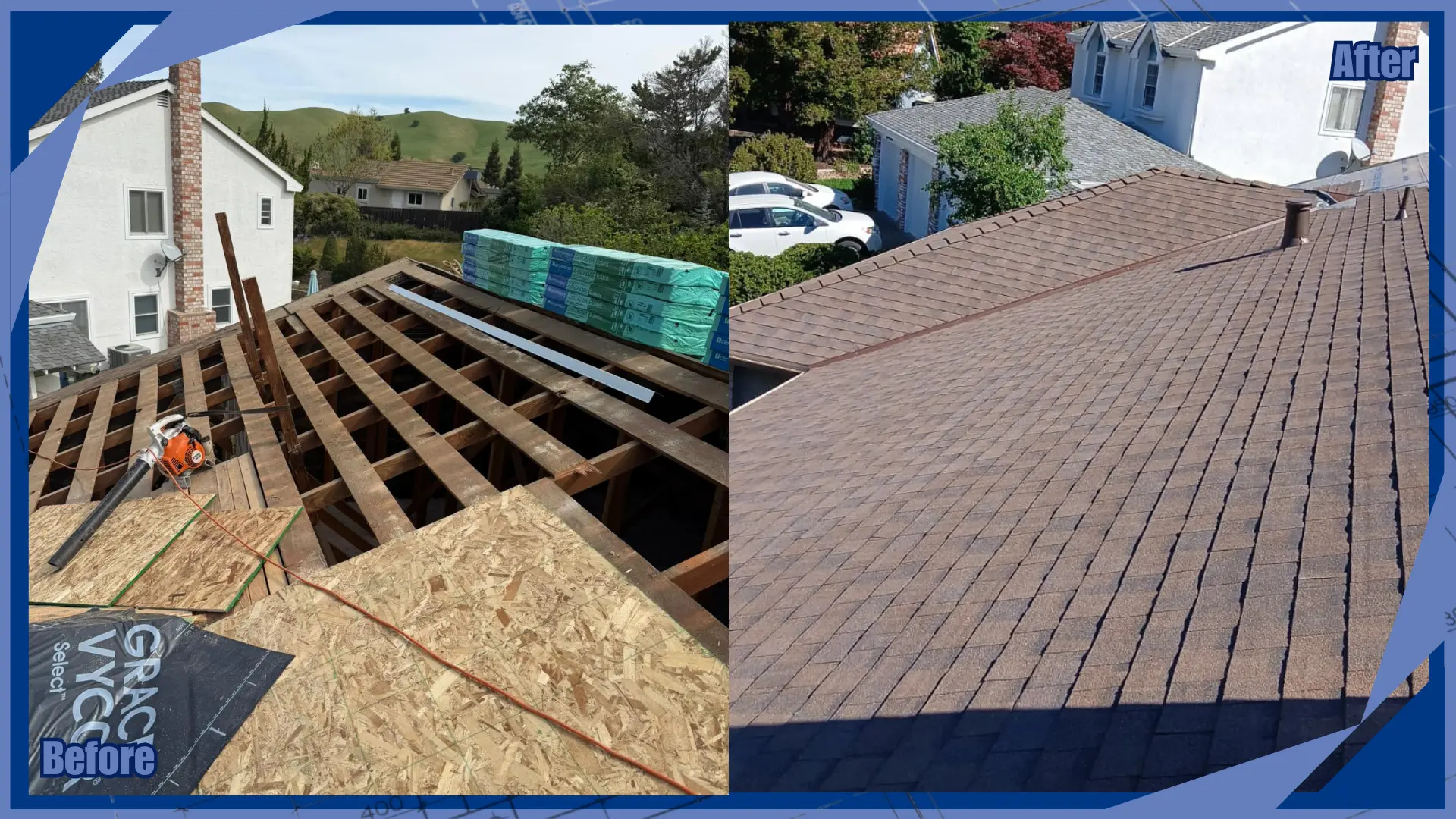
If we were standing on your roof instead of writing this, we’d tell you the same thing we tell every homeowner: don’t authorize work based on where the ceiling stain showed up. Ask where the water actually entered, how long that condition has existed, and what it will cost to leave it alone for another year. Sometimes the honest answer is a repair. Sometimes it isn’t. Either way, a small, unaddressed detail rarely stays small, and it deserves an honest look before it decides for you. If you’re still weighing roof repair vs replacement San Francisco options on your own property, an honest inspection settles it faster than guessing. Call us before the next storm makes the decision for you.