
San Francisco’s older homes often have roofing challenges that are easy to miss from the ground. Roof repair older homes in San Francisco requires looking beyond visible damage because many issues begin with aging materials, hidden moisture, and decades of weather exposure. Older roofs were built differently, and the city’s fog, salt air, steep hillsides, and seasonal rain create conditions that require careful evaluation.
A roof on a Victorian home in Haight-Ashbury or a historic property in Pacific Heights may still have years of life left, but small issues can quietly affect the structure below. Understanding these common problems helps homeowners recognize what deserves attention before minor concerns become larger repairs.
Why Older San Francisco Homes Require Different Roofing Attention
Older homes often have unique construction details that newer buildings do not. Many feature complex rooflines, original materials, decorative elements, and layouts that require careful maintenance.
A roof does not fail all at once. Water usually finds a small weakness first, then slowly moves through surrounding materials. A loose flashing detail, worn underlayment, or clogged drainage path may appear insignificant until moisture reaches the interior.
San Francisco’s environment adds another layer. Coastal fog near the Outer Sunset and Richmond District can keep roof surfaces damp for extended periods. Wind exposure around Twin Peaks and hillside areas can place additional stress on shingles, tiles, and flashing.
The age of a home does not automatically mean it needs replacement. It means the roof deserves an inspection that understands how older structures age.
Common Roofing Problems Found During Older Home Inspections
Aging Roof Materials
Roofing materials naturally change over time. Asphalt shingles become brittle, clay tiles may crack, and older slate materials can loosen after decades of weather exposure.
Many San Francisco homes were built with materials selected for their architectural character. A Spanish-style home near the Mission District may have clay tile, while a historic property in Russian Hill may include slate or other traditional materials.
The goal is not always to replace everything immediately. A careful evaluation determines whether repairs, maintenance, or replacement makes the most sense.
Damaged Or Deteriorated Flashing
Flashing is one of the most important parts of a roof system. It directs water away from vulnerable areas such as chimneys, skylights, valleys, and roof edges.
Many leaks begin around transitions rather than open roof surfaces. This is why flashing deserves close attention during inspections.
Older homes often have flashing that has been repaired multiple times or modified over the years. Those areas can become weak points where water slowly enters beneath roofing materials.
Worn Underlayment Beneath Tile Roofs
One of the most overlooked roofing issues involves the layer underneath visible roof materials.
Tile can last for many decades, but the waterproof underlayment beneath it has a shorter lifespan. When that layer deteriorates, leaks can develop even when the tiles still appear functional.
This is a common discovery during an old home roof inspection in San Francisco because homeowners often assume the visible roofing material tells the entire story.
The roof above the conversation is only part of the system. The hidden layers often determine how well it performs.
Poor Drainage And Water Movement
San Francisco’s hills create unique drainage challenges. Homes in neighborhoods like Bernal Heights, Glen Park, and Diamond Heights often have slopes that influence how water moves around a property.
A roof must work with gutters, valleys, downspouts, and surrounding grading. When these systems become blocked or damaged, water may collect where it should continue moving away.
Water follows patience. Small drainage problems can create long-term moisture issues when they are ignored.
Moisture Damage And Hidden Leaks
Roof leaks do not always announce themselves immediately. A homeowner may notice a ceiling stain long after water first entered the roof system.
Fog exposure near Ocean Beach, salt air near the Marina District, and repeated winter storms can contribute to gradual deterioration.
Moisture can affect decking, insulation, framing, and interior finishes if it remains unresolved. Finding the entry point early often prevents more extensive repairs later.
Roof Repair Older Homes In San Francisco Requires Understanding Original Construction
Older homes are not simply newer homes with more years behind them. Their materials, layouts, and design choices require a different approach.
A Victorian home in the Castro or Cole Valley may have intricate roof details that should be preserved. A Craftsman-style home in the Sunset District may have different drainage patterns and material considerations.
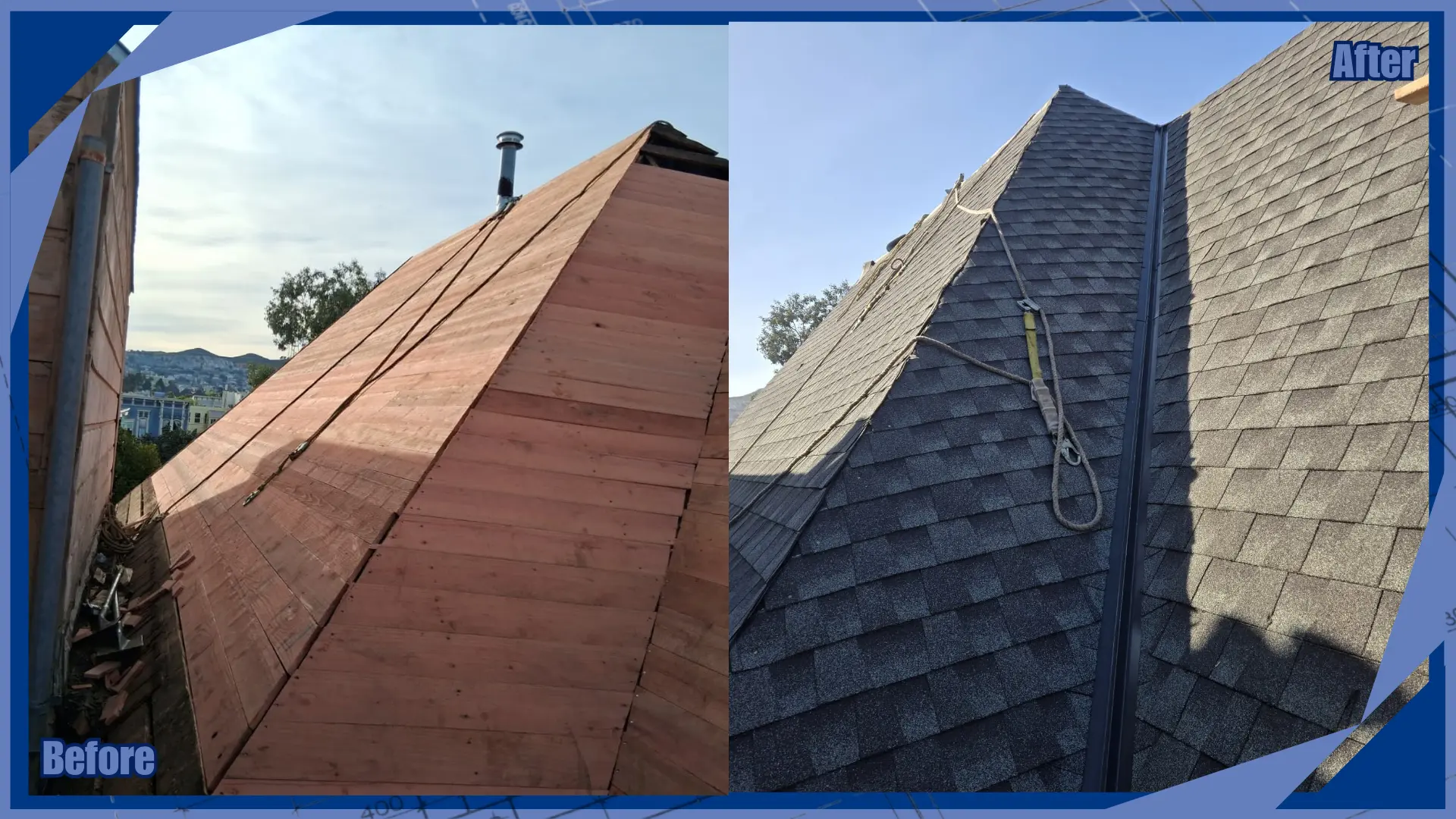
Successful repairs respect the original structure while addressing modern performance needs. Matching existing materials, protecting architectural details, and improving vulnerable areas can help a roof age gracefully.
What A Roofing Inspection Should Look At
A thorough inspection should examine more than damaged shingles or missing tiles. Important areas include:
- Flashing around roof penetrations
- Condition of underlayment
- Roof deck stability
- Attic ventilation
- Gutter and drainage performance
- Signs of moisture movement
- Previous repair work
These details provide a clearer understanding of what the roof needs.
How San Francisco Weather Accelerates Roofing Wear
San Francisco’s climate creates a different roofing environment than many other cities.
Fog is one of the most consistent influences. Areas near the Presidio, Lands End, and Golden Gate Bridge vicinity experience moisture exposure that can keep surfaces damp longer.
Salt air can also affect metal components, especially near coastal neighborhoods. Wind-driven rain can test flashing and drainage systems during stronger storms.
Proper ventilation matters as well. Warm, trapped air in an attic can contribute to moisture problems from inside the home. A balanced roofing system manages both exterior weather and interior conditions.
Questions Homeowners Should Ask Before Repairing An Older Roof
Before approving any roofing work, homeowners should understand what is actually being addressed.
Consider asking:
- Where is the moisture entering the roof system?
- Is the issue limited to one area or part of a larger pattern?
- Are original materials being preserved where possible?
- Does the repair include flashing improvements?
- Could hidden damage appear once materials are removed?
- Is the attic ventilation working properly?
The best roofing conversations focus on understanding, not urgency.
Frequently Asked Questions About Older San Francisco Roofs
How Often Should Older San Francisco Homes Have Roof Inspections?
Older homes benefit from regular inspections because small issues can develop slowly. Many homeowners schedule evaluations every few years or after major weather events.
An inspection helps identify changes before they affect interior spaces or structural materials.
Do Older Homes Always Need A Complete Roof Replacement?
No. Age alone does not determine whether replacement is necessary. Some older roofs can continue performing with proper repairs and maintenance.
The condition of the materials, drainage, flashing, and underlying structure matters more than the calendar.
Why Do San Francisco Roof Leaks Often Appear After Rain?
Water does not always enter directly above where stains appear. It can travel along framing, decking, and insulation before becoming visible.
Finding the original entry point requires looking at the entire roof system.
Are Historic Roof Materials Worth Preserving?
In many cases, yes. Original materials can contribute to a home’s character and value.
Repairs that respect the existing structure often provide better long-term results than unnecessary replacement.
What Is The Biggest Warning Sign For An Older Roof?
Repeated leaks are often a sign that something deeper needs attention. Multiple repairs in the same areas may indicate the underlying issue has not been fully addressed.
Schedule A Careful Roof Evaluation For Your San Francisco Home
Older homes deserve roofing decisions based on observation, not assumptions. At San Francisco Roofing Contractors, we examine the details that influence long-term performance, from flashing and drainage to hidden moisture concerns.
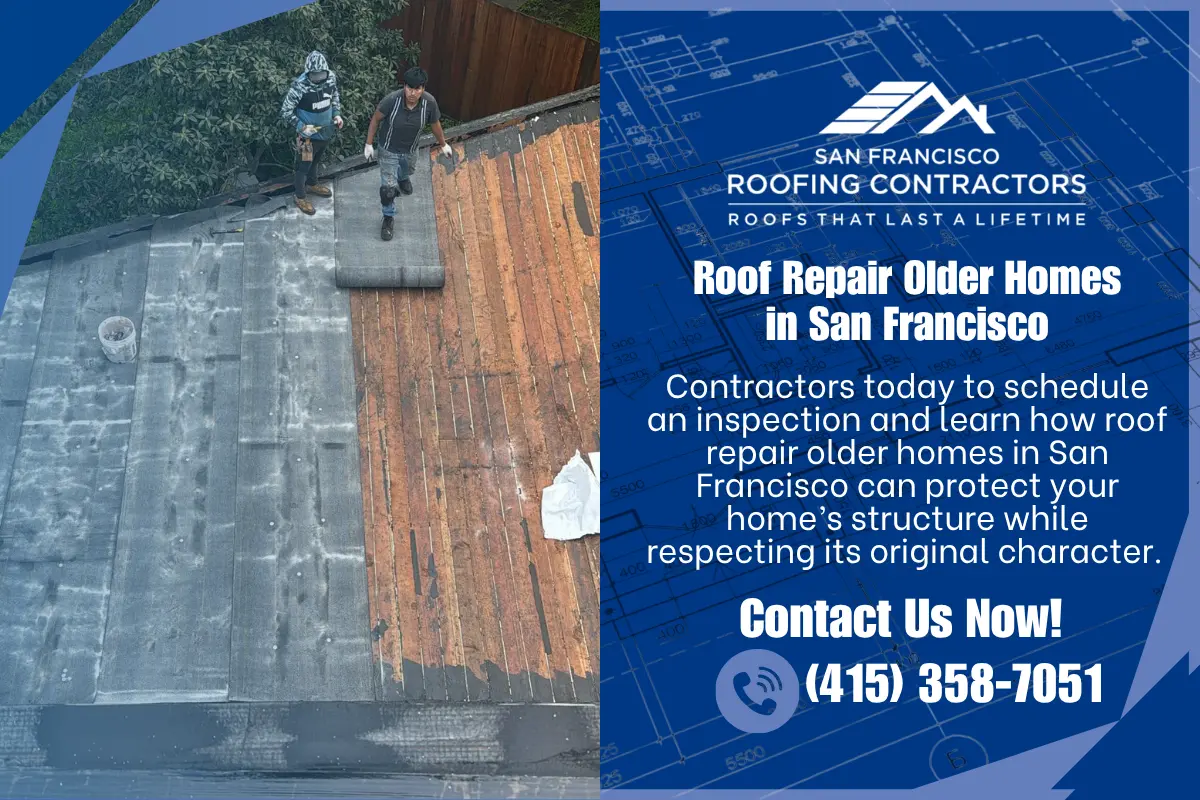
Whether your home is near Golden Gate Park, Ocean Beach, the Presidio, or another San Francisco neighborhood, we help you understand what your roof needs before deciding on repairs. Contact San Francisco Roofing Contractors today to schedule an inspection and learn how roof repair older homes in San Francisco can protect your home’s structure while respecting its original character. We’ll help you evaluate the roof carefully and plan the right next step.