
When you own or manage a commercial property in San Francisco, your roof isn’t just a protective layer, it’s one of the most important investments you’ll ever make for your building. From safeguarding your tenants and assets to helping you stay compliant with city codes, your roof plays a role that’s both practical and strategic. But here’s the challenge: the commercial roof installation process can feel overwhelming if you don’t know what to expect. Between permits, design choices, inspections, and city regulations, it’s easy for business owners to feel like they’re in over their heads.
That’s exactly why commercial roof installation experts in San Francisco are essential. They not only handle the heavy lifting of installation but also guide you through each step of the journey, ensuring that your project runs smoothly, efficiently, and in compliance with strict local standards. In this detailed step-by-step guide, we’ll walk you through the commercial roofing process, highlighting how professionals manage every stage and how each step benefits you as a business owner.
Step 1: Initial Consultation and Roof Assessment
Every successful project begins with a thorough evaluation. During this phase, commercial roof installation experts in San Francisco will:
- Inspect the current roof to check for leaks, damage, and structural concerns.
- Take precise measurements to avoid under- or over-ordering materials.
- Review compliance requirements that may affect design and installation.
San Francisco’s climate makes this step especially critical. Constant fog, salty coastal air, and seismic risks all influence how your roof should be designed. A thorough assessment means fewer surprises later. By identifying hidden issues upfront, you avoid last-minute delays and unexpected costs.
Step 2: Design and Material Selection
Once the assessment is complete, contractors move into the design stage. Here, you’ll collaborate with experts to select a system that balances function, budget, and compliance.
Key Considerations for San Francisco Roof Design
- Climate: Cool roofs that reflect heat are often chosen to reduce urban heat effects.
- Building type: Warehouses, restaurants, and office towers each have unique roofing needs.
- Sustainability goals: Many businesses pursue eco-friendly solutions that align with California’s Title 24 energy efficiency standards.
Popular Roofing Materials
- TPO (Thermoplastic Polyolefin): Affordable, energy-efficient, and ideal for flat roofs.
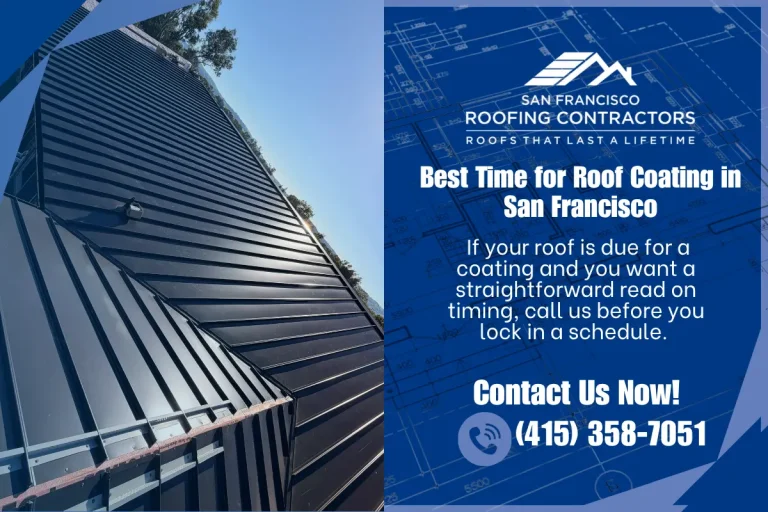
- Metal roofing systems: durable, fire-resistant, and long-lasting, often paired with modern aesthetics.
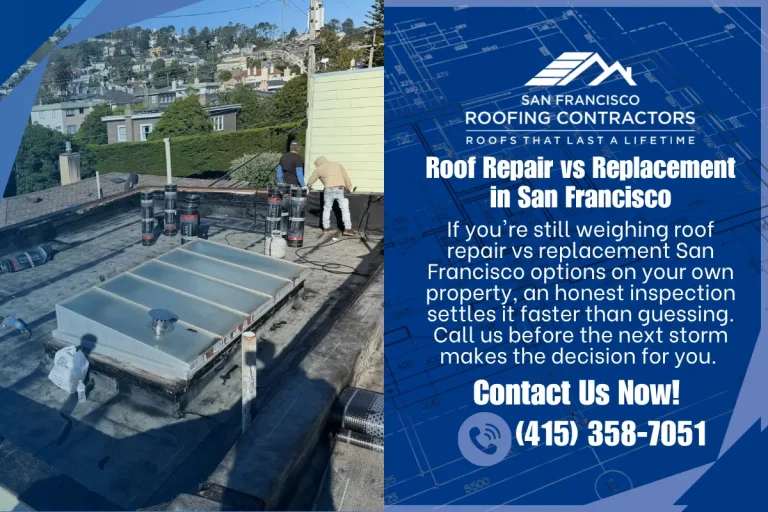
- Torch Down Roofs: Torch down systems are durable, fire-resistant, and well-suited for flat roofs where water pooling is a concern.
- Modified Bitumen: Strong and reliable, particularly for high-traffic rooftops.
With expert guidance, you’ll choose a roofing material that doesn’t just meet today’s needs but also ensures durability and long-term savings.
Step 3: Permitting and Code Compliance
San Francisco has some of the most detailed building codes in California, and roofing projects must comply with a wide range of standards. Local roofing contractors can help you with the process and requirements:
- Filing necessary permit applications with the San Francisco Department of Building Inspection (DBI).
- Ensuring roofing systems are designed to meet seismic safety requirements.
- Incorporating energy-efficient designs that satisfy Title 24 codes.
- Scheduling mandatory city inspections at critical milestones of the project.
By working with commercial roof installation experts in San Francisco, you avoid costly mistakes, fines, or rework, you avoid costly mistakes, fines, or rework. Compliance isn’t just about following rules, it’s about protecting your building, tenants, and reputation.
Step 4: Preparing the Worksite
Preparation is a step that often goes unnoticed, but it sets the tone for the entire project. Roofing contractors typically:
- Remove old roofing materials if replacement is required.
- Set up barriers to protect landscaping, HVAC units, and parking areas.
- Establish safe pathways for workers while maintaining building access for tenants.
- Install safety harnesses and barriers in compliance with OSHA standards.
Proper site prep minimizes disruptions to your daily operations, keeping your business running smoothly during construction.
Step 5: Installation of the Roofing System
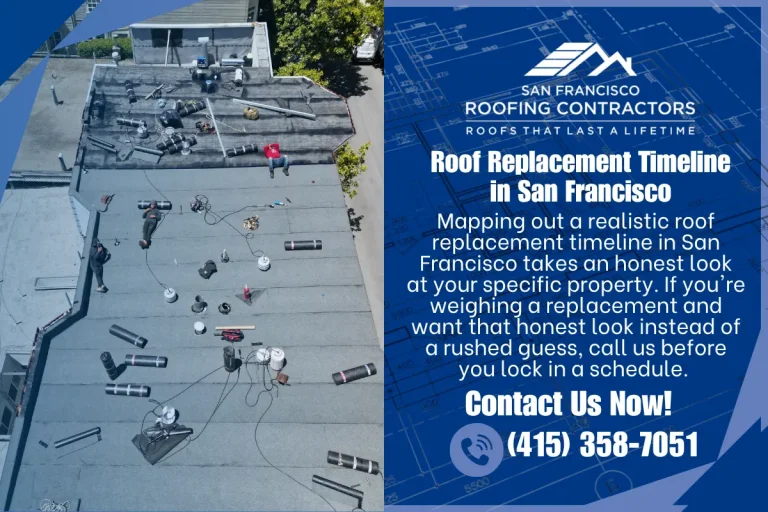
This is where plans turn into reality. Depending on the system you’ve chosen, the installation process usually includes:
- Installing insulation layers to improve energy performance.
- Applying membranes or panels with adhesives, fasteners, or heat-welding.
- Securing seams and flashings to prevent leaks.
- Adding proper drainage systems to manage seasonal rains.
- Coordinating with electricians or HVAC professionals if equipment integration is needed.
San Francisco’s unpredictable weather is another factor here. Experienced roofers plan around fog and drizzle, ensuring installation stays on schedule without compromising quality. A properly installed roof protects your business against costly water damage, lowers energy bills, and extends the lifespan of your building.
Step 6: Quality Assurance and Inspections
Once installation wraps up, roofing experts don’t just pack up and leave. They carry out rigorous quality checks to confirm that every detail is correct. This includes:
- Internal inspections to verify seam integrity, insulation coverage, and material alignment.
- Third-party inspections if required by city regulations.
- Coordination with DBI inspectors to close out permits and certify compliance.
You get assurance that your roof isn’t just visually complete, it’s structurally sound, code-compliant, and fully warrantied.
Step 7: Final Documentation and Maintenance Planning
After inspections, contractors provide a project close-out package that typically includes:
- Warranty documents covering both labor and materials.
- As-built diagrams of the roofing system.
- Compliance certificates required for future transactions or leasing.
- Maintenance guidelines that outline inspections and preventative care.
Some commercial roof installation experts in San Francisco also offer maintenance agreements, which can include biannual inspections, cleaning, and small repairs. You walk away not only with a finished roof but also with a roadmap for protecting your investment for decades to come.
Why Code Compliance Is So Important in San Francisco
In a city like San Francisco, code compliance isn’t just bureaucratic paperwork, it’s essential. With frequent seismic activity and an emphasis on sustainable building practices, roofing projects must meet some of the most demanding standards in the country.
How Experts Stay Ahead
- Constantly monitoring updates from the California Energy Commission and DBI.
- Training crews in seismic and energy-efficiency standards.
- Building relationships with inspectors to ensure smooth approvals.
Staying compliant means avoiding costly penalties while also making your building safer, greener, and more attractive to tenants.
Common Mistakes to Avoid When Installing a Commercial Roof
Even with experts involved, business owners can fall into traps that slow projects down or increase costs. Here are a few to watch for:
- Choosing the cheapest contractor: This often leads to poor workmanship and costly repairs later.
- Ignoring maintenance after installation: Even the best roof needs regular care.
- Overlooking long-term energy costs: Upfront savings may disappear if your roof isn’t energy efficient.
- Delaying code compliance checks: Cutting corners early can lead to expensive corrections later.
By knowing these pitfalls, you’ll make smarter decisions and get the most value from your roofing investment.
Additional Tips for San Francisco Business Owners
- Plan for minimal disruption: Ask your contractor about phased work schedules.
- Budget realistically: Set aside a 10–15% contingency for unforeseen issues.
- Think about the future: Consider solar-ready roofs or designs that accommodate green upgrades.
- Ask questions: A reliable contractor will be transparent and happy to explain details.
Installing a commercial roof in San Francisco is no small task, but with the right experts, it doesn’t have to be overwhelming. For many building owners searching for commercial roof installation experts near me, having trusted local professionals makes the process far less stressful. By following a structured step-by-step process, local contractors ensure your project is efficient, durable, and fully compliant with city regulations.
When you partner with commercial roof installation experts in San Francisco, you gain more than just a roof, you gain peace of mind that your investment is protected, and your business is built on a solid foundation.
Next Steps: Partner with San Francisco Roofing Contractors
Installing a commercial roof in San Francisco is no small task, but with the right experts, it doesn’t have to be overwhelming. By following a structured step-by-step process, we at San Francisco Roofing Contractors ensure your project is efficient, durable, and fully compliant with city regulations. Contact us today to schedule your consultation and discover how our experts can make your roofing project seamless from start to finish.